

There’s a concept in sociology called the “third place.” It was named by sociologist Ray Oldenburg in 1989, and it describes something most of us have felt without having a word for it.
The first place is home. The second place is work. The third place is somewhere else — a space that belongs to neither, where you go not because you have to, but because you want to. A place where you can exhale.
For most of human history, third places were pubs, barbershops, town squares, and — especially in the last century — coffee shops. They’re where communities form, where strangers become regulars, where you sit for two hours and leave feeling more like a person than when you walked in.
Not every coffee shop is a third place. Most aren’t. Here’s what separates the ones that are.
1. It welcomes you without requiring anything from you
A true third place doesn’t make you feel like a transaction. You can order one coffee and stay for an hour. You can come in alone and not feel awkward about it. You can sit by the window with your thoughts and no one is going to hover over you or make you feel like you’re taking up space.
This sounds simple. It isn’t. It’s a combination of physical design, staff culture, and an intentional decision by the owners about what kind of place they want to run. A café optimized purely for revenue per square foot will never be a third place. The math doesn’t allow for it.
2. The regulars define it more than the menu
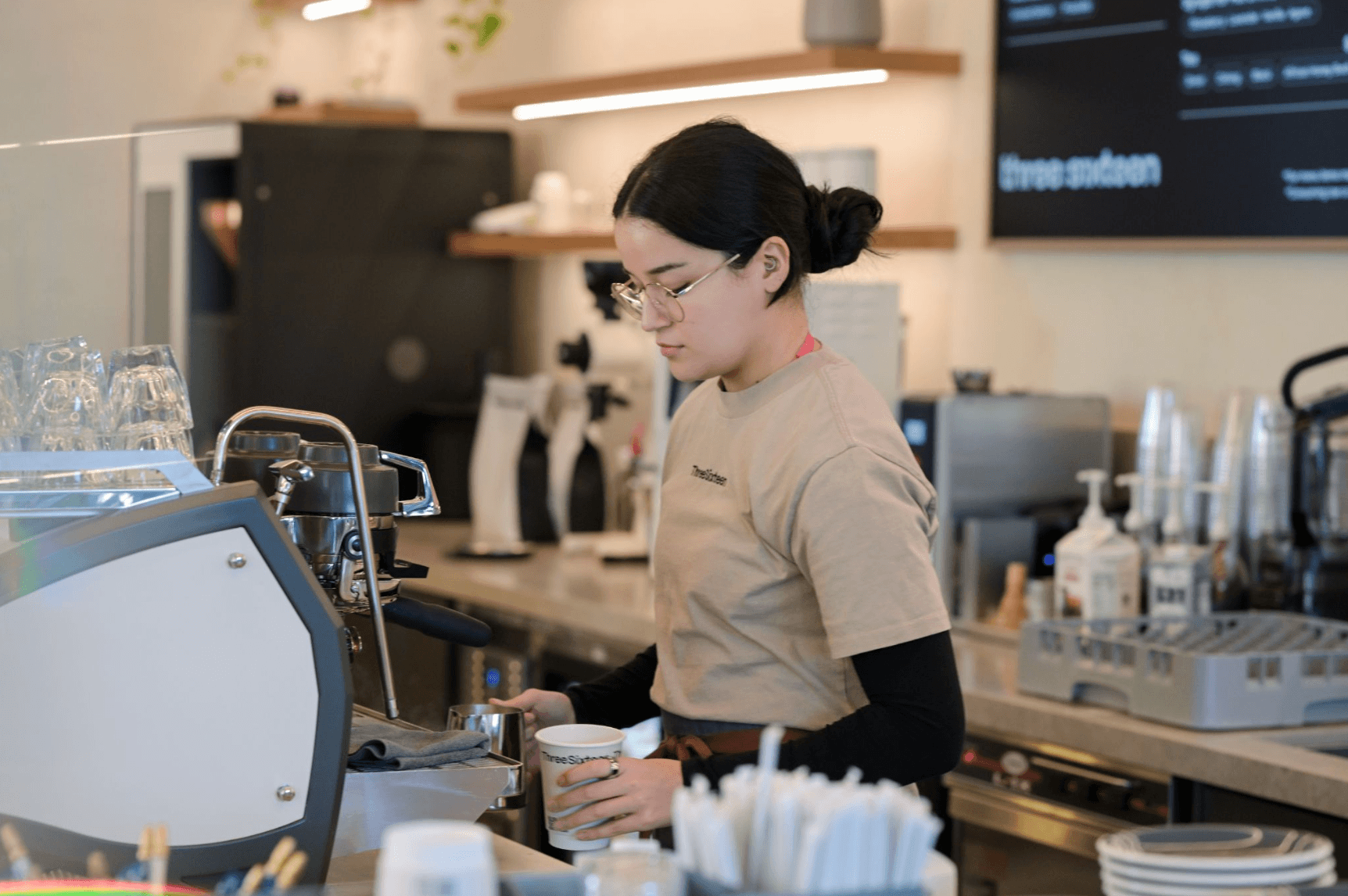
You know a café is a third place when the regulars start to feel like part of the furniture — in the best sense. When the barista knows your order before you say it. When you start recognizing faces. When you notice when someone hasn’t been in for a week.
This kind of familiarity doesn’t happen by accident. It’s built through consistency — consistent hours, consistent quality, consistent staff who actually remember people. Every time a regular walks in and feels recognized, that’s a small deposit into something larger than a cup of coffee.
We think about this a lot at Three Sixteen. Some of our regulars have been coming in since our first week. Watching them become part of the fabric of the place is one of the most meaningful parts of building this.
3. The space does real work
Third places don’t happen in rooms that were designed as an afterthought. The layout, the light, the noise level, the seating — all of it either invites people to stay or quietly pushes them toward the door.
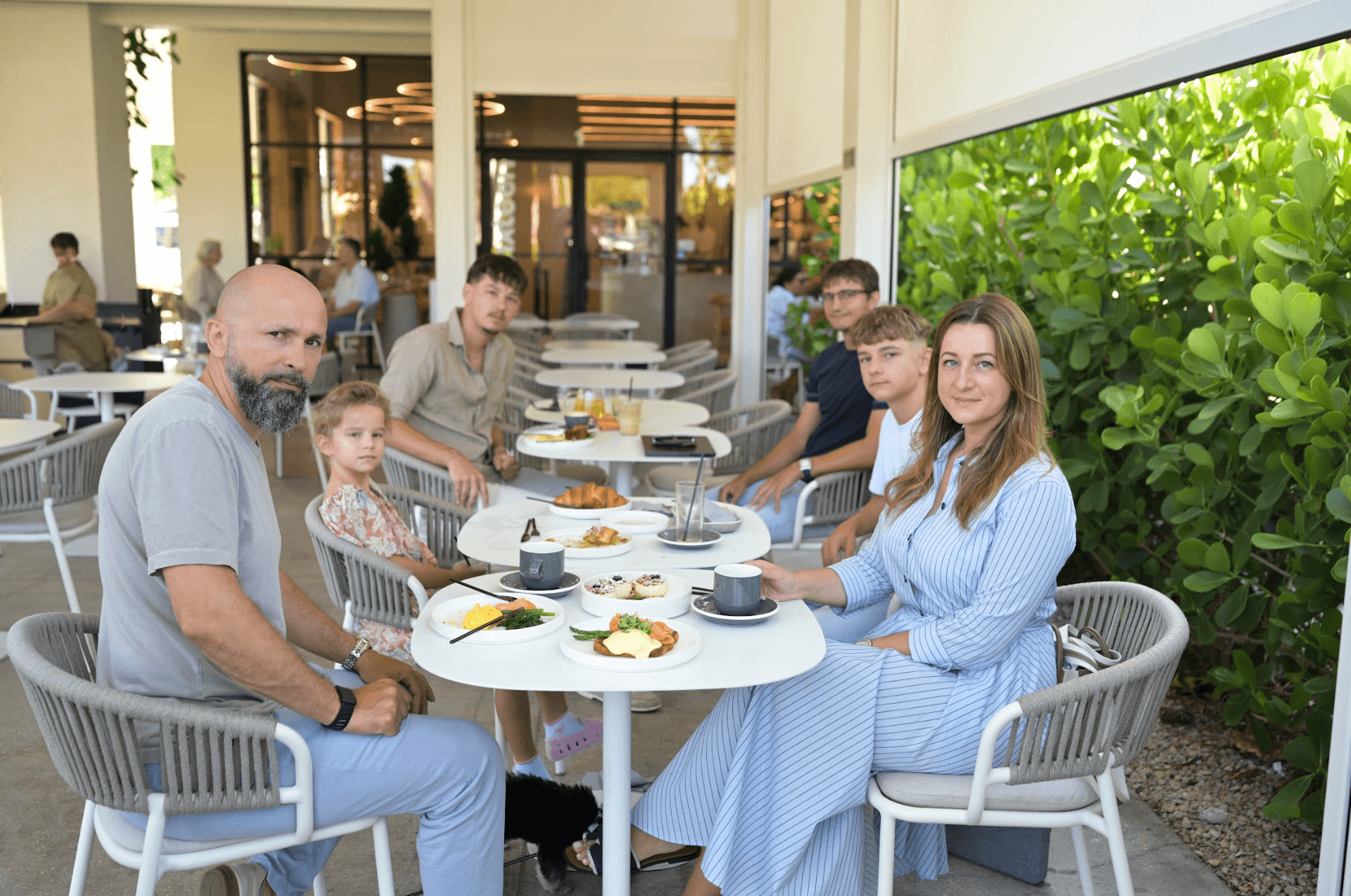
When we designed Three Sixteen, we spent an enormous amount of time thinking about how the space would feel to someone sitting in it alone at 9am, and to a group of four catching up over a Saturday morning. Those are different needs, and a well-designed space can serve both without forcing a choice.
Natural light matters. Acoustics matter. The distance between tables matters. These aren’t aesthetic decisions — they’re decisions about what kind of human behavior the space makes possible.
4. It has a point of view
The third places that last are not neutral. They stand for something. The best coffee shops in the world have a clear identity — a set of values that show up in the sourcing, the design, the way staff talk to guests, the music, the hours, even the font on the menu.
That identity is what turns a visitor into a regular and a regular into someone who brings their friends. People don’t form attachments to generic spaces. They form attachments to places that feel like they were built for someone, and that someone is them.
Three Sixteen is built around a specific idea of what a morning should feel like: intentional, unhurried, worth showing up for. That’s not just a brand statement. It shapes every decision we make.
5. It exists beyond the transaction
A coffee shop that’s only a coffee shop is not a third place. A third place is one where the coffee is the entry point, not the entirety of what’s on offer.
What’s on offer, in the best cases, is something harder to name: a sense of belonging, a ritual worth repeating, a space that feels like yours even though it belongs to everyone. Starbucks tried to build this at scale and mostly built the infrastructure of it without the soul. The difference is visible the moment you walk in.
The soul comes from people who care — about the coffee, about the space, about the guests who walk through the door. It can’t be franchised. It has to be built, slowly, one morning at a time.
Why we think about this at Three Sixteen
When we were building this place, we didn’t start with the menu. We started with a question: what do we want someone to feel when they walk in?
We wanted them to feel like they’d arrived somewhere. Not just stopped for coffee, but actually arrived — at a place that was worth the detour, worth the habit, worth coming back to.
Southwest Florida has beautiful restaurants, beautiful hotels, beautiful beaches. What it didn’t have — at least not in the way we imagined it — was a place that felt like a genuine third place. A neighborhood anchor. Somewhere that belonged to the people who showed up.
That’s what we’re building. We’re still building it. But on the mornings when I look around and see someone working quietly by the window, two friends catching up over cortados, a regular on their third visit this week — I think we’re getting there.