
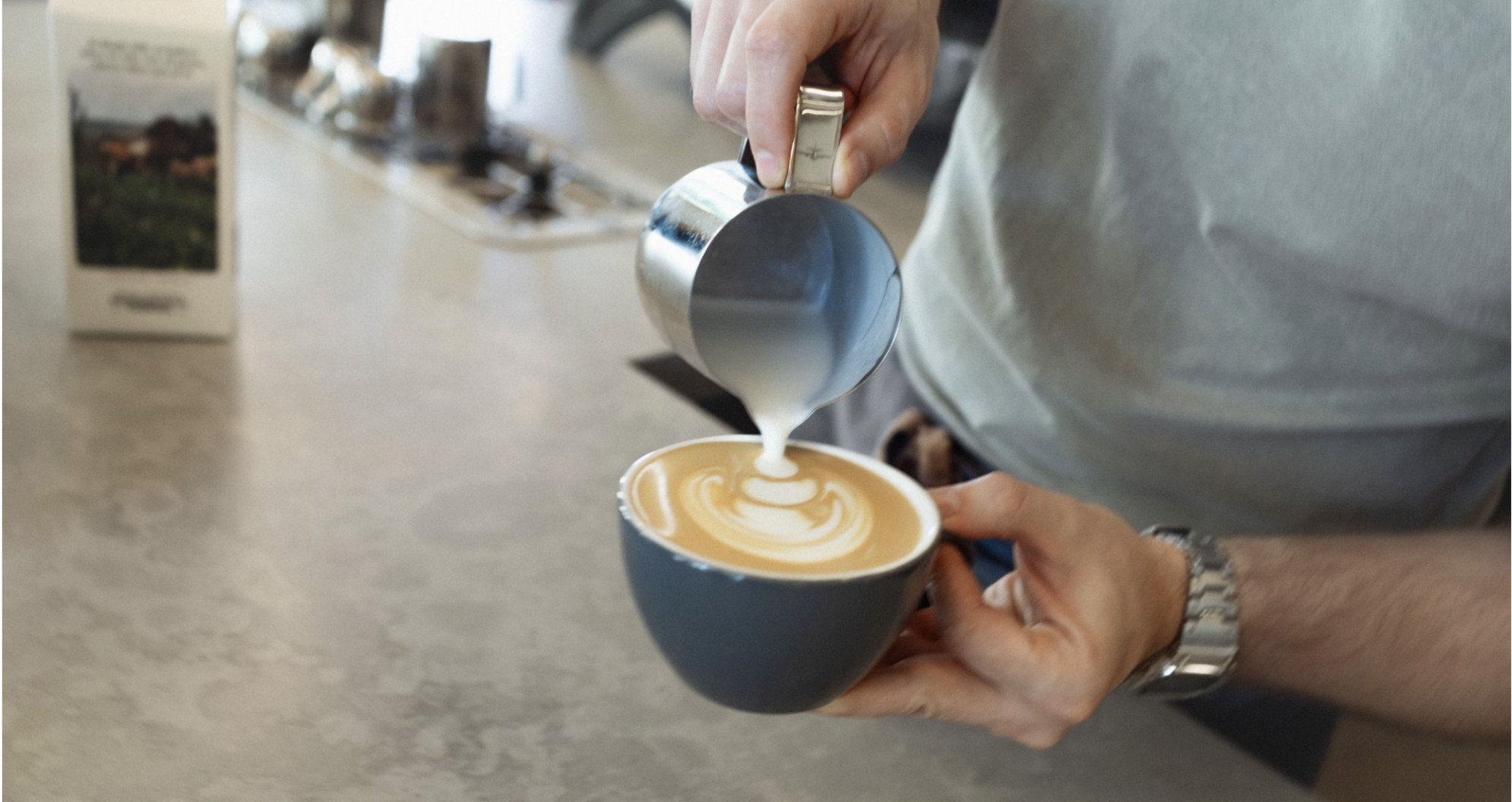
The average latte in the United States now costs $5.60. In cities like Seattle, San Francisco, and New York, $7 to $8 is becoming the norm. In high-end specialty cafés, $9 is no longer surprising.
For anyone paying attention to their morning coffee bill, this is not news. But the conversation happening inside the industry — about how to raise prices without losing the guests you’ve spent years building a relationship with — is one that most cafés are navigating quietly, without a playbook.
Here’s an honest look at why prices are rising, what guests actually think about it, and what the cafés that are handling it well are doing differently.
The math behind the price
When a guest sees a latte go from $5.50 to $6.50, the instinct is to assume the café is taking advantage. The reality is more complicated — and in most cases, more uncomfortable for the operator than the guest realizes.
Arabica coffee prices hit a 47-year high in February 2025, reaching $4.41 per pound on futures markets — a 70% increase in a single year. Roasted coffee at U.S. retail stores was 21% more expensive in August 2025 than a year earlier. But green coffee is only part of the cost stack. Milk is up 3.3% year-over-year. Sugar and alternatives are up 3.5% — and 23% over the past three years. Labor costs have risen in virtually every U.S. market. Energy costs are up. Packaging is up. And rent, the largest fixed cost for most cafés, doesn’t go down when commodity markets are volatile.
Add it up, and a latte that cost a café $2.10 to produce in 2021 now costs closer to $2.80 or $3.00 — before labor allocation, overhead, or any margin. The price increase on the menu is not the café extracting profit. In most cases, it’s the café trying not to lose money on every cup it sells.
“For small and medium-sized businesses, absorbing these rising costs indefinitely is simply not viable.” — Darleen Scherer, Black Sheep Coffee Consultancy
Starbucks announced a price freeze for fiscal 2025 to protect consumer goodwill. Within months, that commitment was quietly walked back as the cost reality made it mathematically impossible to hold.
What consumers actually think
The data on consumer reaction to rising coffee prices is more nuanced than the headlines suggest.
On one hand, there is real sensitivity. A Citigroup survey of 1,900 international coffee drinkers found that 37% have increased how much coffee they make at home in response to rising prices. TikTok is full of Gen Z creators sharing how to replicate café drinks at home for a fraction of the cost. One guest in Massachusetts who used to visit a café six to seven times a week now goes four times a month — instead purchasing a grinder, drip machine, and espresso setup for home.
On the other hand, 62% of Millennials say they are willing to pay $7 for their daily coffee because of the joy it brings. Among those who are cutting back, the pattern is consistent: they are not abandoning coffee. They are editing — trading down from more expensive options, reducing frequency, or shifting some visits to home brewing. They are keeping the cafés they value most.
The key phrase is “value most.” Price sensitivity in coffee is not uniform. It is heavily mediated by the guest’s perception of what they’re getting for the price. And that perception is shaped by everything the café does — not just what’s in the cup.
The perception gap: why the same price increase lands differently
Two cafés raise their latte price by $1. At one, guests notice and some stop coming. At the other, guests accept it without much complaint and keep showing up.
The difference is almost never the coffee itself. It’s the relationship the café has built with its guests — and specifically, whether guests feel they understand what they’re paying for.
A café that has been transparent about its sourcing, honest about its costs, and consistent in its quality has earned a degree of trust that functions like a buffer against price sensitivity. When that café raises its prices, guests don’t experience it as arbitrary. They experience it as a consequence of something they’ve already been shown they care about: quality ingredients, fair sourcing, a product made by people who know what they’re doing.
A café that has never explained what makes it different — that has been pleasant and consistent but not communicative about the “why” behind what it does — has no buffer. The price increase is just a price increase. And the guest’s first question is: why should I pay more for this when I can get something cheaper down the street?
What the cafés handling this well are doing
The operators who are navigating price increases without losing meaningful guest volume tend to share a few approaches.
The first is transparency. Not in a defensive or apologetic way — but proactively explaining what’s driving costs in language that’s honest and specific. “Arabica futures hit a 47-year high this year. Our beans cost 40% more than they did 18 months ago. We haven’t changed what we use, so the price reflects what it actually costs to make this properly.” That’s a conversation that builds trust. It treats the guest as an adult who can understand the supply chain, not a consumer to be managed.
The second is incremental increases rather than dramatic jumps. Rather than absorbing cost pressure for a year and then raising prices by $1.50 at once, the operators doing this well make smaller, more frequent adjustments — $0.25 to $0.35 at a time — that normalize the reality of operating in an inflationary environment without creating a shock moment.
The third is holding the product standard. This sounds obvious, but it’s the most commonly violated principle under cost pressure. A café that raises prices while simultaneously switching to cheaper beans, reducing portion size, or lowering its quality bar is making the worst possible trade. It is asking guests to pay more for less. That never ends well.
The fourth is knowing which guests you’re pricing for. Not every guest is the right guest at every price point. A café that has built a clear identity — specialty coffee, in-house food, a considered experience — is not trying to compete with the $3.50 drip coffee at the gas station. The guests who come to a specialty café already understand they’re paying for something different. The price increase is a test of whether the café has made that difference visible enough.
Where Three Sixteen stands on this
We’ve raised our prices. Not once — multiple times over the past year, as the cost reality of running a specialty café with an in-house bakery has made it unavoidable.
Each time, it’s a difficult conversation — internally, with ourselves, about what we can justify and what we can’t. Our position has been consistent: we will not lower the quality of what we serve to protect a price point. The almond croissant costs what it costs to make properly. The espresso we use costs what it costs to source at the level we’ve committed to. We would rather be honest about that and lose some price-sensitive guests than keep them by quietly becoming a worse version of what we set out to be.
What we’ve tried to do is earn the right to charge what we charge. Through consistency, through transparency about what we’re building, through the experience of being in space and being served by people who actually care about it. That’s the only version of this that we believe in.
The $7 latte is coming for every specialty café in the U.S. — not because operators are greedy, but because the inputs that make specialty coffee what it is are genuinely more expensive than they were. The cafés that will hold their guest base through that transition are the ones that have given their guests a reason to believe the price is worth it.

.png)