
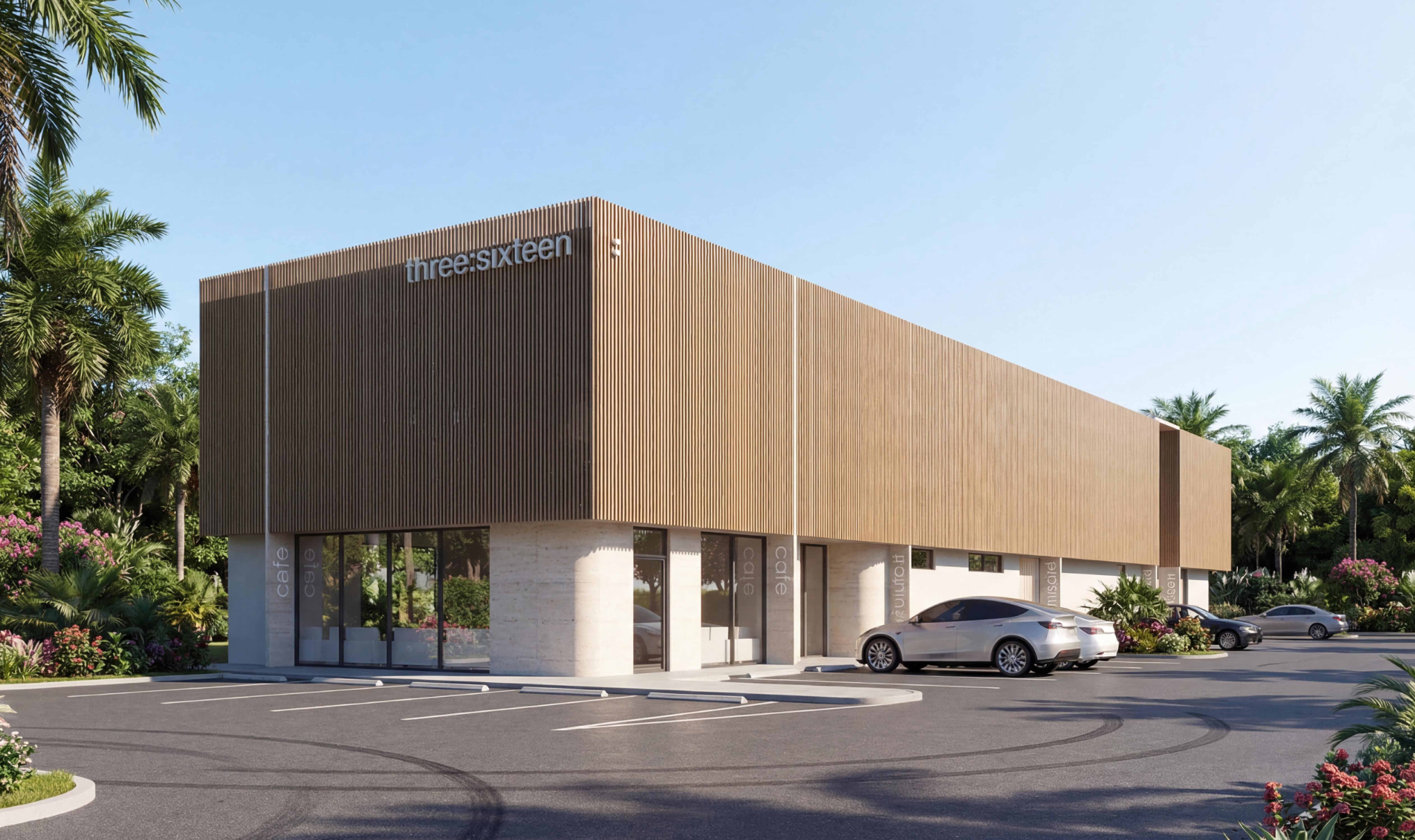
We bought an acre of land in South Naples. We are going to build two buildings on it. And what goes inside those buildings is the reason everything else we're doing eventually makes sense at scale.
We're calling it Three Sixteen Center. It's not a café. It's the infrastructure that makes the cafés possible — and better, and scalable, and consistent in a way that a growing network of locations cannot be without something like this behind it.
Here's what we're planning, why we're planning it this way, and what it means for where Three Sixteen is going.
What the problem is
The hardest thing about scaling a specialty café brand is not finding locations or raising capital. It's maintaining quality as you grow.
Every café we open faces the same set of challenges: sourcing the right beans consistently, producing pastry at a standard that can't be met with frozen commercial dough, training a team to operate at the level the brand requires, producing content that represents the brand accurately, managing the supply chain for coffee, tea, merchandise, and packaging across multiple locations simultaneously.
When you have one café, you solve these problems one at a time, by hand, with whatever is available. When you have five or ten, solving them the same way doesn't scale. The quality drifts. The consistency breaks down. The thing that made the first café worth building becomes harder and harder to replicate as you add locations — unless you build the infrastructure to support it.
Three Sixteen Center is that infrastructure for South Florida.
What goes inside
The two buildings on South Naples acre are designed to house everything the café network needs that individual locations cannot efficiently provide for themselves.
The roastery is where we take control of the coffee from green bean to cup. Right now we source green beans from Bellwether network and roasting beans at our Wiggins Pass location in house using Bellwether roaster. As we grow, roasting in a dedicated roastery and sourcing green beans directly from farms will give us full control and consistency for all locations. It also gives us a product we can package and sellonline.
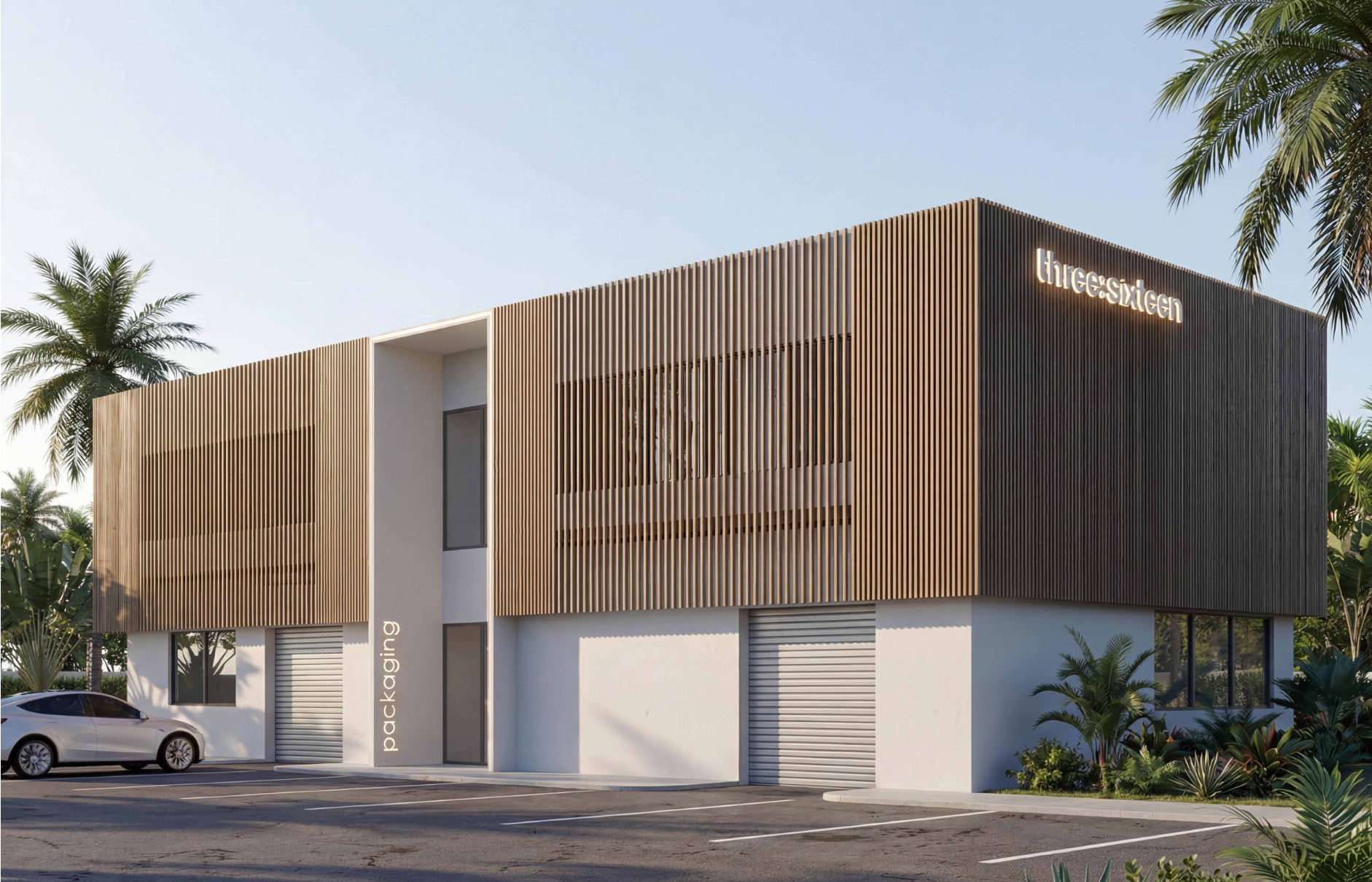
The central bakery solves the lamination problem at scale. Right now every croissant at Wiggins Pass is laminated in-house by our team. That's the right way to do it and it produces the right result — but it requires skilled labour and time at every location –– this is very expensive and inefficient. The central bakery allows us to produce laminated dough that goes out to locations ready to proof and bake, maintaining the quality of in-house production without requiring every location to have a full pastry kitchen and team. For locations where full in-house production is possible, we do it. For locations where it isn't, the central bakery is what makes the croissant still worth ordering.
The commercial kitchen serves multiple functions: it will be used for the café at this location, preparation of components that get distributed across the network, training for new kitchen team members for all locations, and the development of new menu items before they go live in any location.
The barista and team training lab is where standards get built and transmitted. Every person who works behind the bar at a Three Sixteen location should understand the coffee, the equipment, the technique, and the standard they're working to. That understanding doesn't happen by osmosis. It requires a dedicated space, dedicated time, and a program that's been thought through carefully. The lab is that space.
The content studio is where the visual identity of Three Sixteen gets produced. The photography, the video, the behind-the-scenes content that makes the brand real to people who haven't visited yet — all of it requires a controlled environment with the right equipment and the right people. Producing that content consistently across a growing brand requires a dedicated space rather than improvised shoots in the corner of a café before opening.
The production and packaging facility handles the physical output that flows from the roastery and the kitchen: coffee packaged for retail and online sale, tea, merchandise, whatever comes next. As the brand grows, the ability to package and ship product from a single controlled facility is what makes e-commerce possible at a meaningful scale.
The offices are where the business that supports the cafés gets run: operations, marketing, finance, the functions that scale with the network rather than living in any individual location.
And there will be a café on-site as well — not just because every Three Sixteen building should have one, but because the Center itself should be a place people can come to. To see the roastery, to take a class (maybe), to understand where the coffee comes from before it reaches the cup at Wiggins Pass or Midtown Bonita.
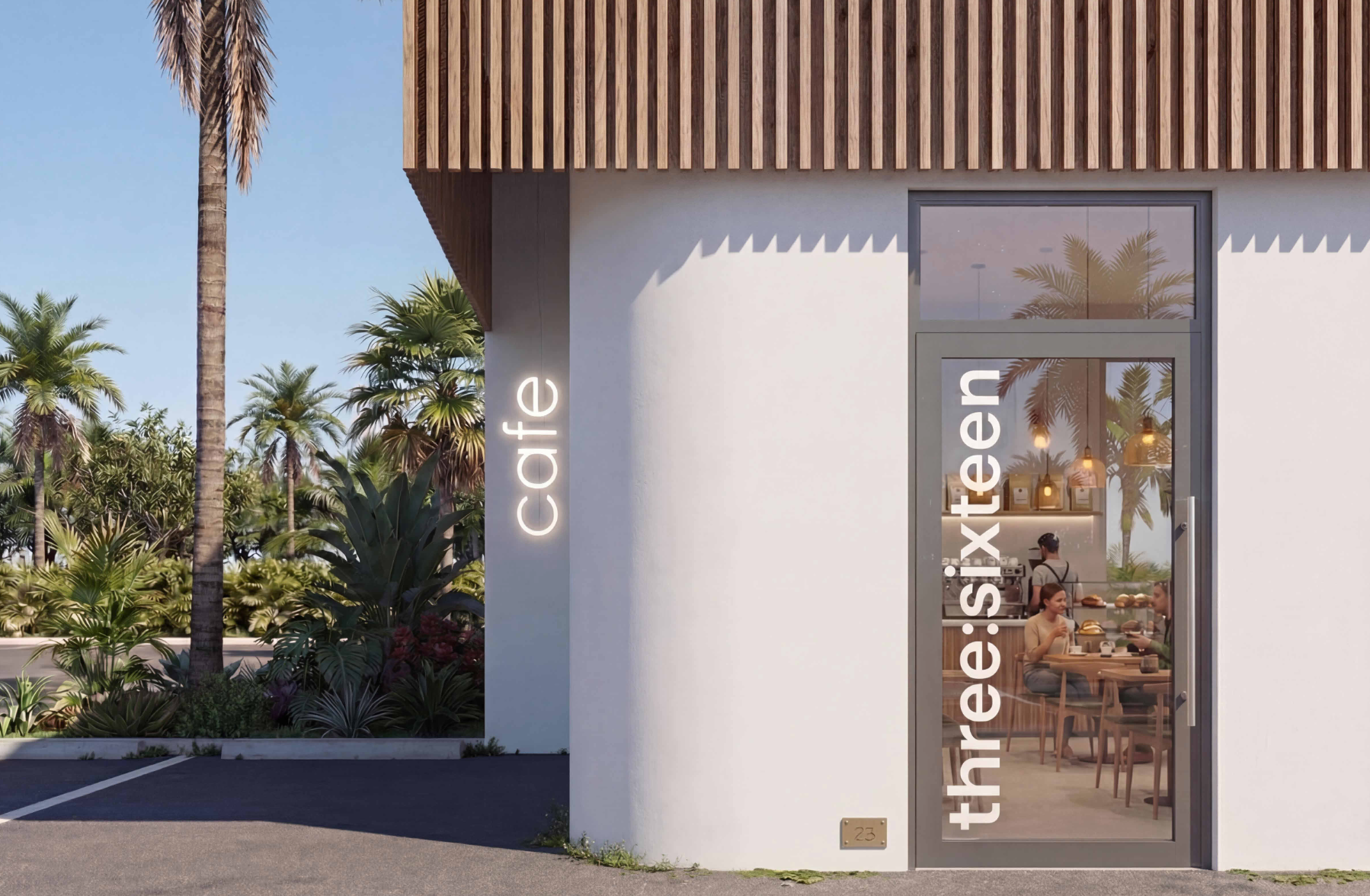
The Center is not the product. The cafés are the product. The Center is what makes the product possible at a scale worth building toward.
The economics of centrallisation
There is a practical dimension to the Center that matters as much as the quality argument.
When you source green coffee for one café, you buy small quantities at retail or near-retail prices. When you source for ten cafés plus all your online sales, you buy at volume, you negotiate differently, and you control the margin at the roasting stage rather than paying it to someone else. The same logic applies to every ingredient, every packaging component, every supply that flows through the network.
Central production also means central quality control. One kitchen producing pastry components to a defined standard is more consistent than ten kitchens producing independently. One roastery calibrating the profile of every bean is more consistent than ten cafés working with whatever their supplier delivered this week or roasting coffee in house themselves.
This is how the best café networks in the world operate. Blue Bottle's production facility in Oakland. Intelligentsia's roasting infrastructure in Chicago and Los Angeles. The centrallised back-end that makes the front-end experience consistent and scalable. Three Sixteen Center is being built with that model in mind from the beginning — not retrofitted after the fact when the problems of inconsistency have already accumulated.
What 10 to 20 cafés requires
The network we're building toward — ten to twenty Three Sixteen locations across South Florida and beyond — is not achievable without something like the Center. Not at the quality level we've committed to.
Ten cafés trying to individually source, roast, bake, train, produce content, and manage their own supply chains would produce ten versions of Three Sixteen that drift from each other over time. The guest who loves Wiggins Pass and visits a location in another city four years from now would find something familiar but not the same. That drift is the quiet failure mode of most expanding café brands. It doesn't happen all at once. It accumulates decision by decision, compromise by compromise, until the brand is a loose collection of places that share a name rather than a coherent identity.
The Center prevents that. It's the physical manifestation of the standard — the place where the coffee gets roasted the way it should be roasted, the dough gets made the way it should be made, the team gets trained to the level the brand requires. Every location draws from the same source. The standard travels with the supply chain rather than having to be rebuilt from scratch in every new space.
Where we are now
We own the land. We are in the design phase for both buildings. This is a multi-year project (just the first phase) — we're not announcing an opening date because we don't have one yet, and we'd rather say that honestly than give a timeline we can't keep.
What we can say is that the decision to build the Center was made before the second café opened. It's not a reaction to growth — it's the plan that makes growth possible without sacrificing what made the first location worth building.
We'll share more as the design develops. If you want to follow the process — the real one, including the parts that don't go exactly as planned — this blog is where we write about it.