
The U.S. household coffee machine market is worth $3.26 billion in 2025 and is projected to reach $4.43 billion by 2030. De’Longhi alone installed more than 15 million coffee machines worldwide in 2025. The global espresso machine market is growing at 6.5% annually — faster than most consumer appliance categories.
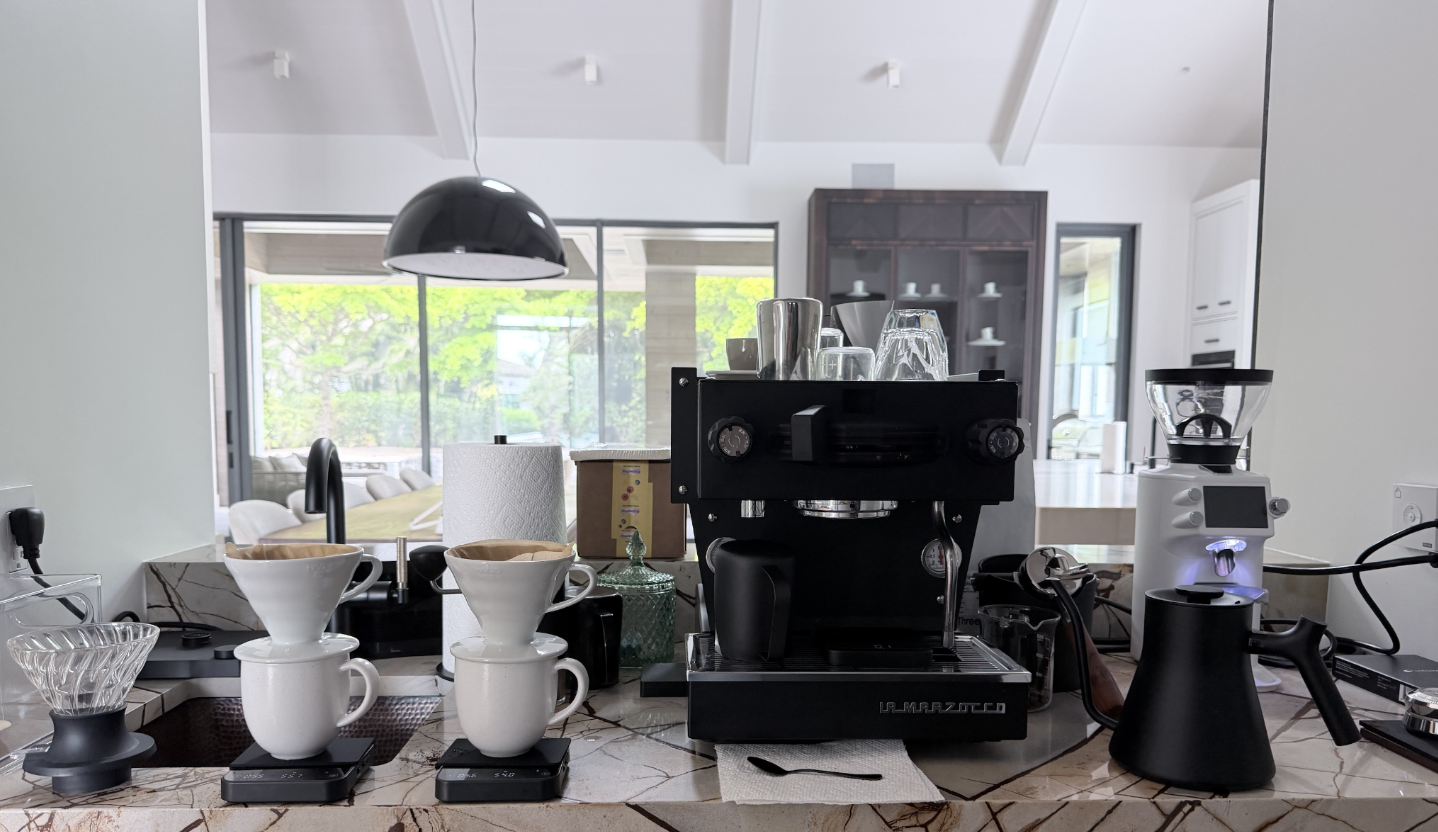
People are not just drinking more coffee. They are building serious home setups — grinders, espresso machines, pour-over equipment, cold brew systems — and they are getting genuinely good at using them. The home barista is no longer a hobbyist curiosity. It’s a mainstream consumer identity.
For cafés, the instinctive reaction to this is anxiety. If someone can make a solid latte at home for $0.50, why would they pay $6.50 to have it made for them? The answer — and the more interesting question — is what that shift actually reveals about what cafés are for.
What’s driving the home brewing boom
Several forces are converging to make home coffee better, more accessible, and more culturally central than it has ever been.
The first is price pressure. With retail coffee prices at record highs and café lattes approaching $7 in major cities, the economics of home brewing have become noticeably more attractive. A high-quality bag of specialty beans brewed at home costs roughly $0.50 to $0.80 per cup. At a café, the same quality costs eight to twelve times more. For a consumer making coffee five days a week, the annual math is significant.
The second is technology. The machines available to home brewers in 2025 bear almost no resemblance to what was available a decade ago. De’Longhi’s Primadonna Aromatic, launched in April 2025, features a large touchscreen, user profiles with individual avatars, and over 30 hot and cold beverage options. Fellow’s debut espresso machine, launched the same month, allows users to save and reproduce custom brewing profiles with barista-level precision. Bosch, JURA, and Breville are competing aggressively in the same space. The result is that a consumer who wants café-quality espresso at home can now get meaningfully close — for an upfront investment rather than a per-cup premium.
The third is culture. Social media has created an enormous home barista community. TikTok and Instagram are full of people documenting their setups, perfecting their technique, and sharing the results. Coffee has become a performance as much as a beverage — and the performance increasingly happens at home, not just at the café bar.
The home barista is no longer someone who can’t afford to go out. It’s someone who has invested in the skill and wants to practice it.
The threat that isn’t quite what it looks like
The obvious reading of the home brewing boom is that it represents a direct threat to cafés. And in one specific sense, it does: the guest who used to stop at a café every weekday morning because it was the only way to get a decent espresso now has a real alternative.
But the data doesn’t show cafés being emptied by home brewing. What it shows is a bifurcation. The café visits that home brewing replaces are the purely functional ones — the stop-on-the-way-to-work because you need caffeine, the quick grab because the office machine is bad. Those visits were never really about the café. They were about the coffee, and if someone can get the coffee at home, they will.
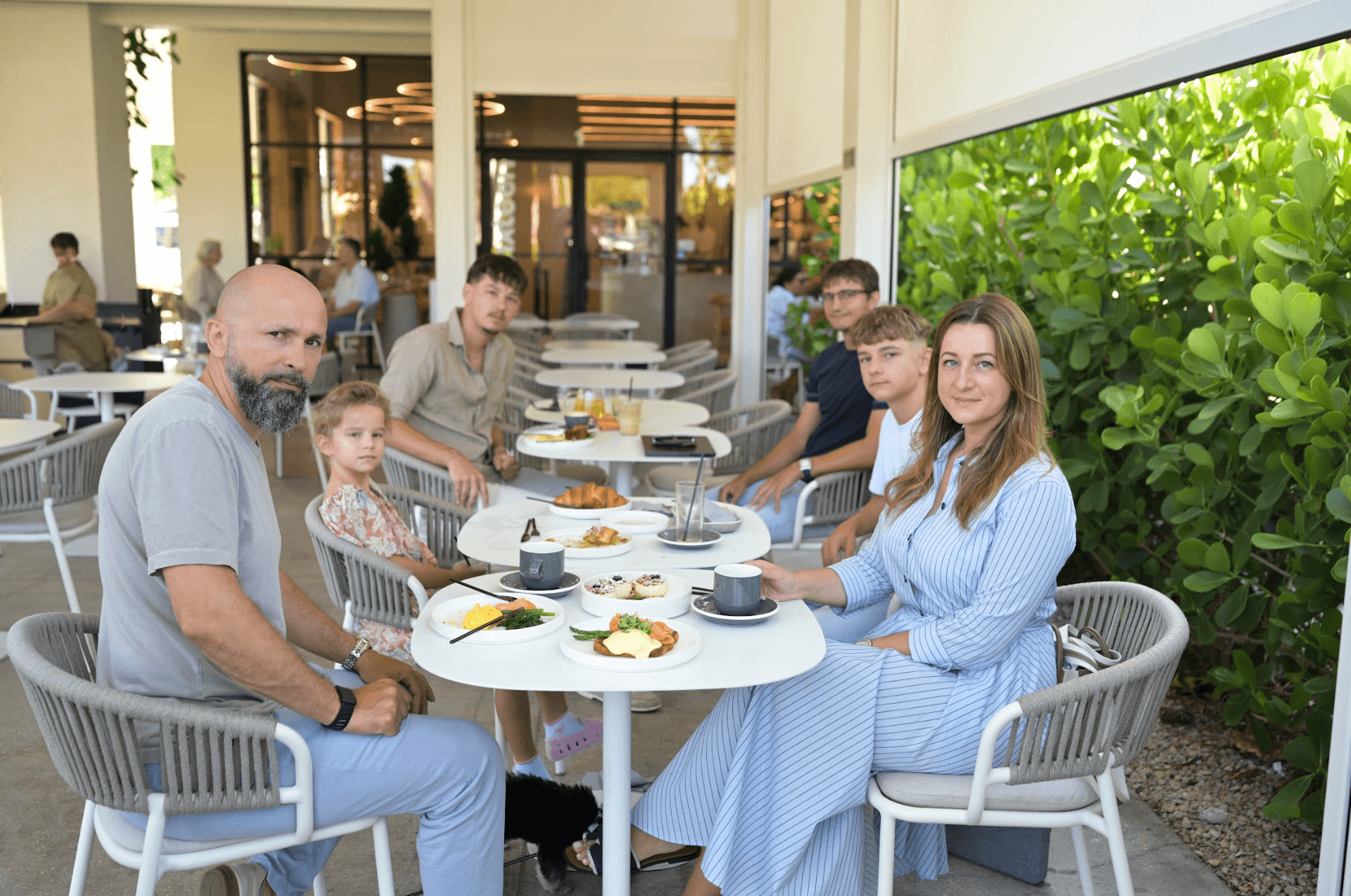
What home brewing doesn’t replace is the café as an experience. The third place. The space that belongs to neither home nor work. The ritual of going somewhere, of being served by someone who cares, of sitting in a room that was designed to make you want to stay. These things cannot be reproduced by a $2,000 espresso machine in a kitchen.
The National Coffee Association’s data supports this. Despite the home brewing boom, past-week café visits among specialty coffee drinkers have remained stable. The consumers investing in home setups are not, by and large, the ones abandoning cafés. They’re adding a home option to an existing café habit — using home brewing for the weekday morning rush and reserving café visits for the moments when the experience itself is the point.
What the boom reveals about what cafés actually need to be
The home brewing boom is a useful pressure test. It forces the question: if someone can make a good latte at home, what does a café have to offer that they can’t?
The answer is not better coffee — or not only that. A skilled home barista with quality beans and a good machine can produce a technically excellent espresso. The café’s advantage is not technical superiority alone. It’s everything surrounding the coffee: the space, the team, the ritual of being somewhere that isn’t home, the feeling of being recognized and served well, the community of other people who chose to be in the same room on the same morning.
This is why the cafés most vulnerable to the home brewing boom are the ones that were only ever about the coffee. The transactional café — efficient, impersonal, optimized for throughput — is competing directly with a home machine. The café that has built something more than that is competing in a different category entirely.
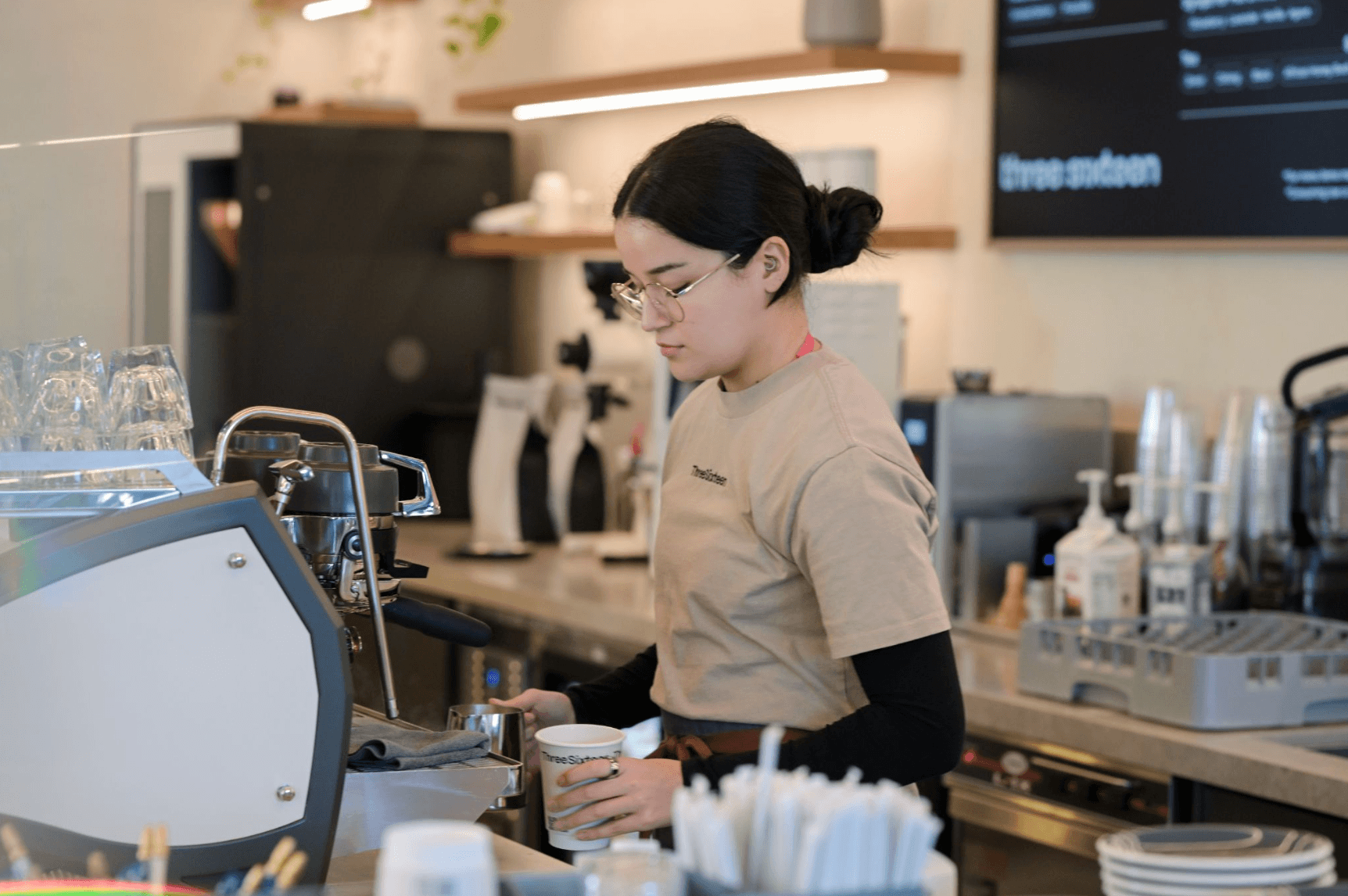
A guest who has a $1,500 espresso machine at home and still comes to Three Sixteen twice a week is not coming for the technical specifications of the shot. They’re coming for something that machine cannot provide. The moment a café loses clarity about what that something is — the experience, the team, the space, the sense of belonging — it becomes vulnerable to every home machine launched at CES.
The opportunity hiding in the boom
There is a version of the home brewing boom that is very good news for serious cafés — and it’s already happening.
The consumer who has invested in a home setup is a more educated coffee drinker. They understand extraction. They know the difference between over- and under-pulled espresso. They have opinions about bean origins and roast profiles. When they walk into a café, they are not a blank slate. They are someone who can appreciate what you’re doing at a level that a guest with no coffee knowledge cannot.
This guest is also more likely to buy beans to take home, more likely to engage with seasonal menu changes, more likely to ask questions and become genuinely attached to a café whose standards match their own. The home brewing boom is, in part, producing the most valuable kind of café guest: one who chooses you not by default but by discernment.
The cafés that benefit from this are the ones that meet that discernment honestly. The ones that can talk about where their beans came from, why they made the choices they made, what the standard is and why it matters. For a café that has built something genuine, the home brewing boom doesn’t create a competitor. It creates a better audience.
Where Three Sixteen stands
We sell bags of beans. We want people to brew our coffee at home. We see no contradiction between that and the café experience we’re building — because they serve different purposes.
The guest who brews our coffee at home on a Tuesday morning and comes into the café on Saturday is not choosing between the two. They’re using both, in different contexts, for different reasons. Our job is to be worth both — worth purchasing as a product to take home, and worth showing up for as an experience when the moment calls for it.
The home brewing boom is not a threat to cafés that understand what they are. It’s a clarifying force — one that makes it very clear, very quickly, whether a café has something to offer beyond the coffee in the cup.