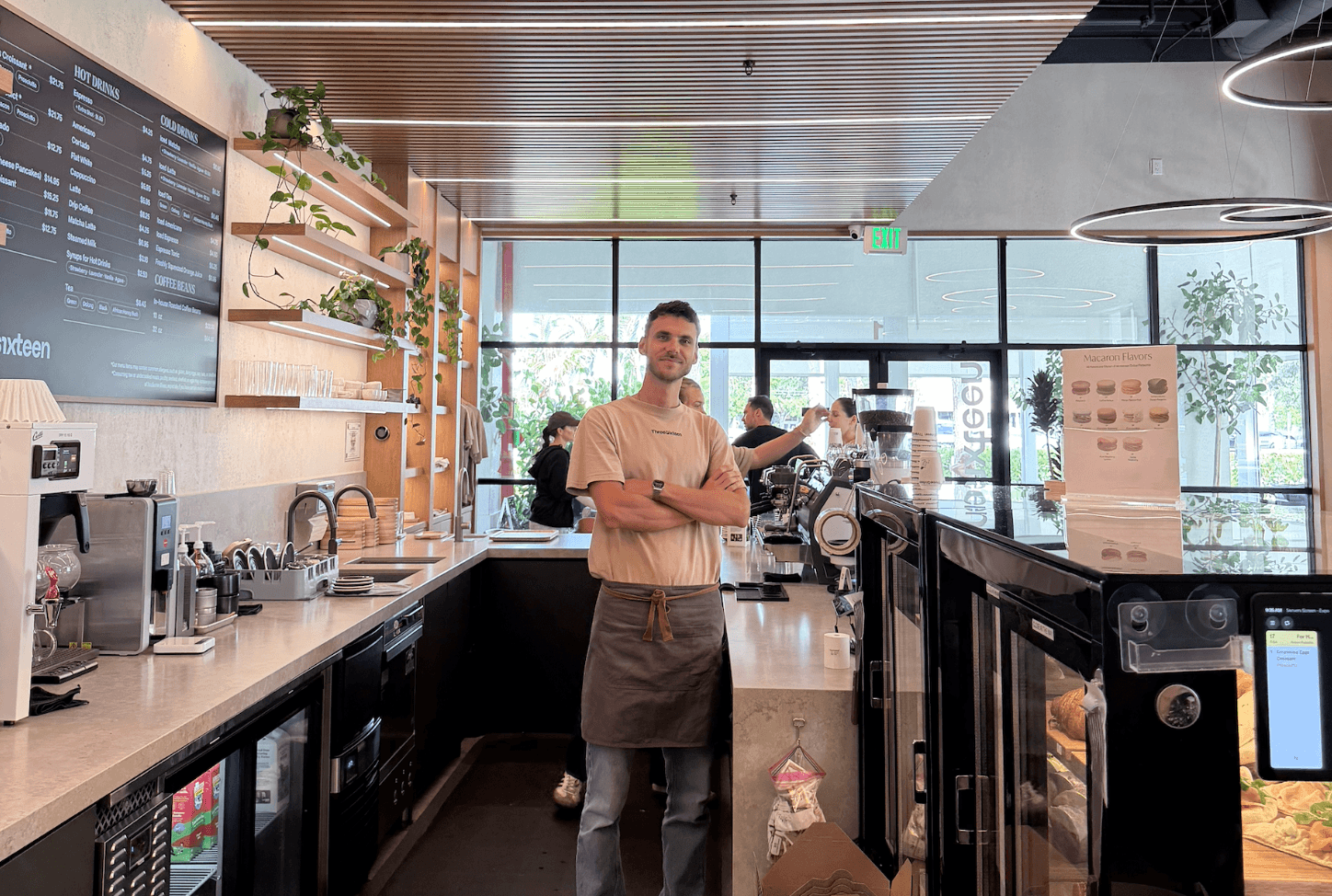

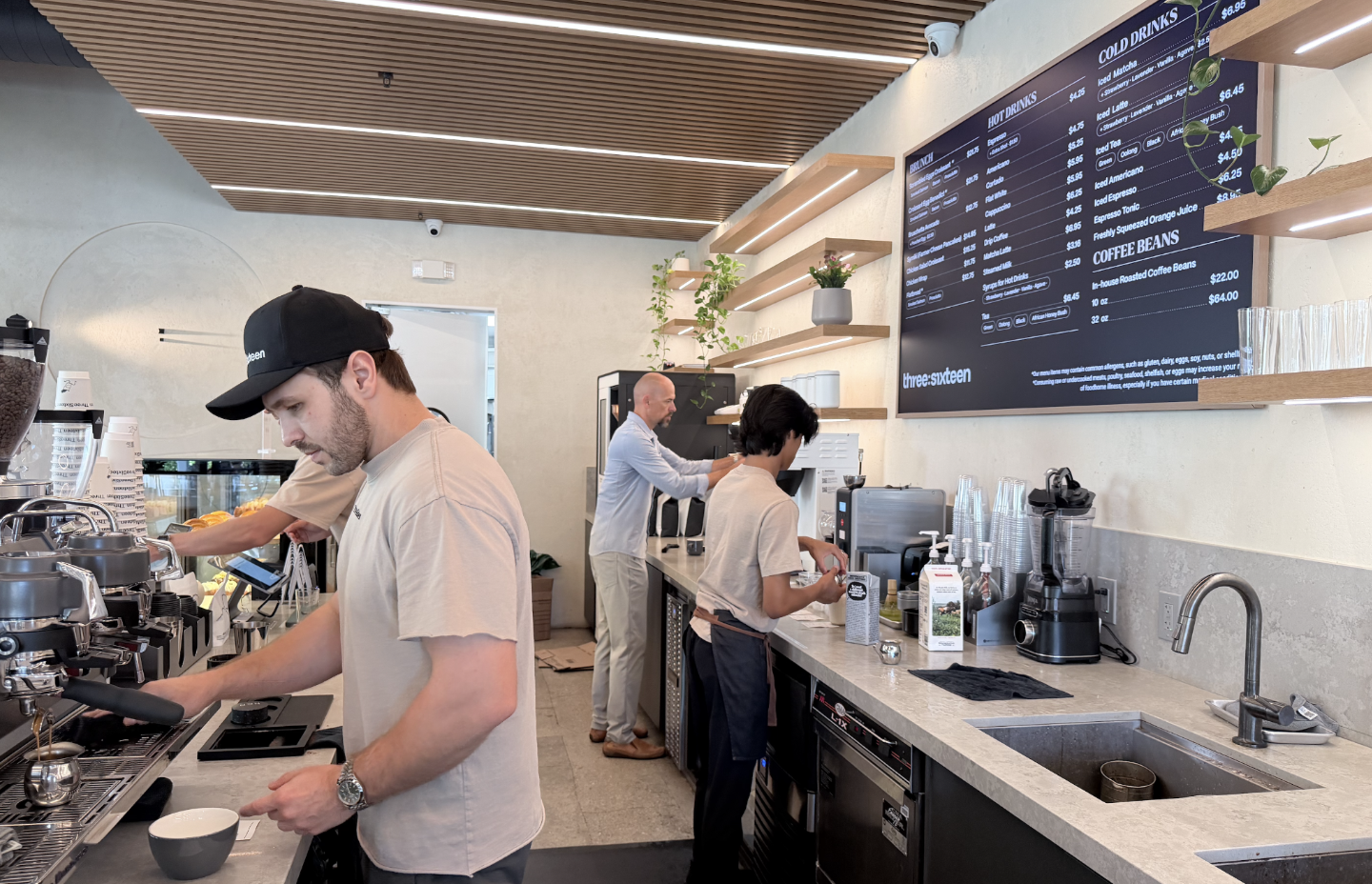
Opening a café for the first time means making mistakes you couldn’t have anticipated — because you didn’t know enough yet to anticipate them. That’s not a criticism. It’s just the nature of doing something for the first time in an industry that punishes inexperience quickly.
We made our share of them at Three Sixteen. Some we caught early. Some cost us real money and real time. And some we’re still working through now, six months in.
This isn’t a list of things other people do wrong. It’s an honest account of the patterns we’ve seen, lived, and in some cases — are still living.
1. Opening before the systems are ready
The pressure to open is enormous. You’ve spent months and usually well over budget on the build-out. The space is ready. The equipment is installed. Everyone around you is asking when they can come in. And so you open — before the training is finished, before the recipes are locked, before the team knows what “good” looks like consistently.
The logic is understandable: you can figure it out as you go. In practice, opening before you’re ready means your first guests — the most important guests, the ones who form their first impression and decide whether to become regulars — experience a version of your café that isn’t what you actually want to be.
People laughed at us for how long we took to open. We took the time anyway. When we opened, experienced operators who visited said it felt strong for a first location. That doesn’t happen by rushing.
2. Hiring for availability instead of fit
When you need staff before opening day, the temptation is to fill the positions as quickly as possible. Someone applies, they seem decent, they can start Monday — hired. You repeat this six times and you have a team.
What you actually have is a group of people who may or may not share your values, your standard, or your vision for what the place should feel like. And in hospitality, the people behind the bar are the product just as much as the coffee is.
The mistake isn’t hiring imperfect people — everyone does that. The mistake is not being clear enough about what you’re looking for beyond technical skills. Energy, warmth, curiosity, the kind of person who notices when a guest looks lost and goes over without being asked — these things matter enormously and they don’t show up on a CV.
We built our core team slowly and carefully. The people who have been with us from the beginning are the ones who understood what we were trying to build before we could fully articulate it. That alignment is worth the time it takes to find.
3. Underpricing out of fear
First-time owners are often terrified of charging what their product is actually worth. They look at the café down the street, see that a latte costs $5.50, and price at $5.75 to feel slightly premium without standing out too much.
The problem is that the café down the street built their pricing model years ago, has amortized their equipment, has a lease rate from a different market, and is operating at a scale you’re not at yet. Their price is not your price.
Underpricing doesn’t just hurt your margins — it communicates something to guests. Price is a signal. A $4 croissant and a $9 croissant tell two completely different stories about what’s in that croissant. If you’ve built something genuinely worth more, charge for it. The guests who are right for your café will understand. The ones who aren’t — you weren’t going to keep them anyway.
4. Trying to please everyone
The menu is too long. There are options for every dietary preference, every price point, every occasion. The space tries to work for a quick takeaway customer and a remote worker and a leisurely brunch group simultaneously. The brand tries to be warm and modern and classic and local all at once.
The result is a café that does many things adequately and nothing exceptionally. And adequate is not a reason to come back.
The best cafés have a clear point of view and they hold it. That means some people won’t connect with it — and that’s fine. The ones who do connect will connect deeply. A smaller loyal audience is worth more than a large indifferent one.
We close at 3:16pm. We’re closed on Sundays and Mondays. Our menu is focused. Every one of those decisions excludes someone. Every one of them also makes us more of something rather than less of everything.
5. Treating marketing as optional in year one
A common assumption among first-time operators is that a good product will market itself. Word of mouth will spread. People will find you. You don’t need to post on Instagram every day or think about SEO or build an email list — just make great coffee and the rest will follow.
This is true eventually. It is not true in year one, especially if your location doesn’t put you in front of thousands of people automatically. Discovery has to be earned, and in the early months, nobody is coming to find you unless you give them a reason and a path.
Marketing in year one isn’t about going viral. It’s about consistently showing people what you’re building — through photos that are honest, through content that has a point of view, through being present enough online that when someone searches for a café in your area, you come up. We learned this the hard way. It’s now something we take seriously every week.
6. Not tracking the numbers closely enough
Hospitality is an emotional industry. Owners care about the coffee, the space, the team, the guest experience. The spreadsheet feels like a different world entirely.
But a café is a financial entity first. And the owners who don’t watch their numbers closely — cost of goods percentage, labor as a share of revenue, average ticket, covers per day, waste — are flying blind. They find out things are wrong when it’s too late to course-correct easily.
You don’t need to be a CFO. You need to know your key numbers every week, understand what they’re telling you, and be willing to make decisions based on them rather than on how the morning felt. Feeling like it was busy and actually being profitable are not the same thing.
7. Doing everything yourself for too long
In the early months, the owner is everywhere. They’re on the bar, handling supplier calls, fixing the equipment, doing the schedule, answering emails, training new staff, and somehow also trying to think about the next three months. It’s survivable for a while. It’s not a long-term model.
The mistake is staying in that mode past the point where it’s necessary. Owners who can’t delegate — either because they don’t trust the team or because they haven’t built the systems that make delegation possible — become the bottleneck. The café can only grow as far as one person’s capacity allows.
Building a team you can trust, documenting how things should be done, and gradually stepping back from the operational details — this is the work that makes a café scalable. It starts on day one, even if the results only show up much later.
8. Confusing activity with progress
A café can feel very busy without actually moving forward. New menu items that don’t improve margins. Redecorating instead of fixing the workflow. Posting on social media without a clear purpose. Running promotions that bring in guests who don’t come back at full price.
The question that cuts through the noise is simple: is this making the café better, or is it just making it feel like something is happening? First-time owners are particularly vulnerable to this because the early months are genuinely chaotic, and activity feels like control.
Progress in a café is measured in a few places: the consistency of the product, the stability of the team, the trend in revenue and margin, the depth of the regular guest base. Everything else is context.
A note on making mistakes
This list isn’t meant to be discouraging. Every café owner on this list has made most of these mistakes — including us. The ones who make it through aren’t the ones who avoided every mistake. They’re the ones who caught them early enough, learned from them honestly, and kept going anyway.
The gap between a café that makes it and one that doesn’t is rarely a single catastrophic decision. It’s usually the accumulation of small ones — and the willingness, or unwillingness, to look at them clearly.