
When people think about opening a café, location is usually the first thing they obsess over. And the assumption is almost always the same: find the busiest corner, the highest foot traffic, the most visible spot. Get in front of as many people as possible.
That logic makes sense on the surface. But it misses something important: there are two fundamentally different types of successful cafés, and they win in completely different ways. Understanding which one you’re building — or which one you’re visiting — changes everything about how you evaluate it.
The High Foot Traffic Café
This is the café in the airport, the lobby of a busy office building, the corner of a street that 10,000 people walk down every day. The model is simple: volume. Enough people pass by that even a conversion rate of 5% fills the place.
The product doesn’t need to be exceptional. It needs to be consistent, fast, and good enough. The location does the selling. The café just needs to not disappoint.
The advantages are obvious:
— Discovery is automatic. You don’t need marketing because the street does it for you.
— Revenue comes early. You’re profitable faster because the demand is already there.
— Lower brand-building pressure. Guests come for convenience, not conviction.
But the trade-offs are real:
— You’re renting someone else’s traffic. If the anchor changes — the office empties, the street gets rerouted, the mall declines — your business changes with it.
— High foot traffic locations command high rents. Your margins are squeezed before you serve a single cup.
— You attract guests who are there by circumstance, not by choice. Loyalty is harder to build because the relationship is transactional by nature.
— The best locations almost never go to first-time operators. Landlords give them to proven brands with track records and financial guarantees.
The Destination Café
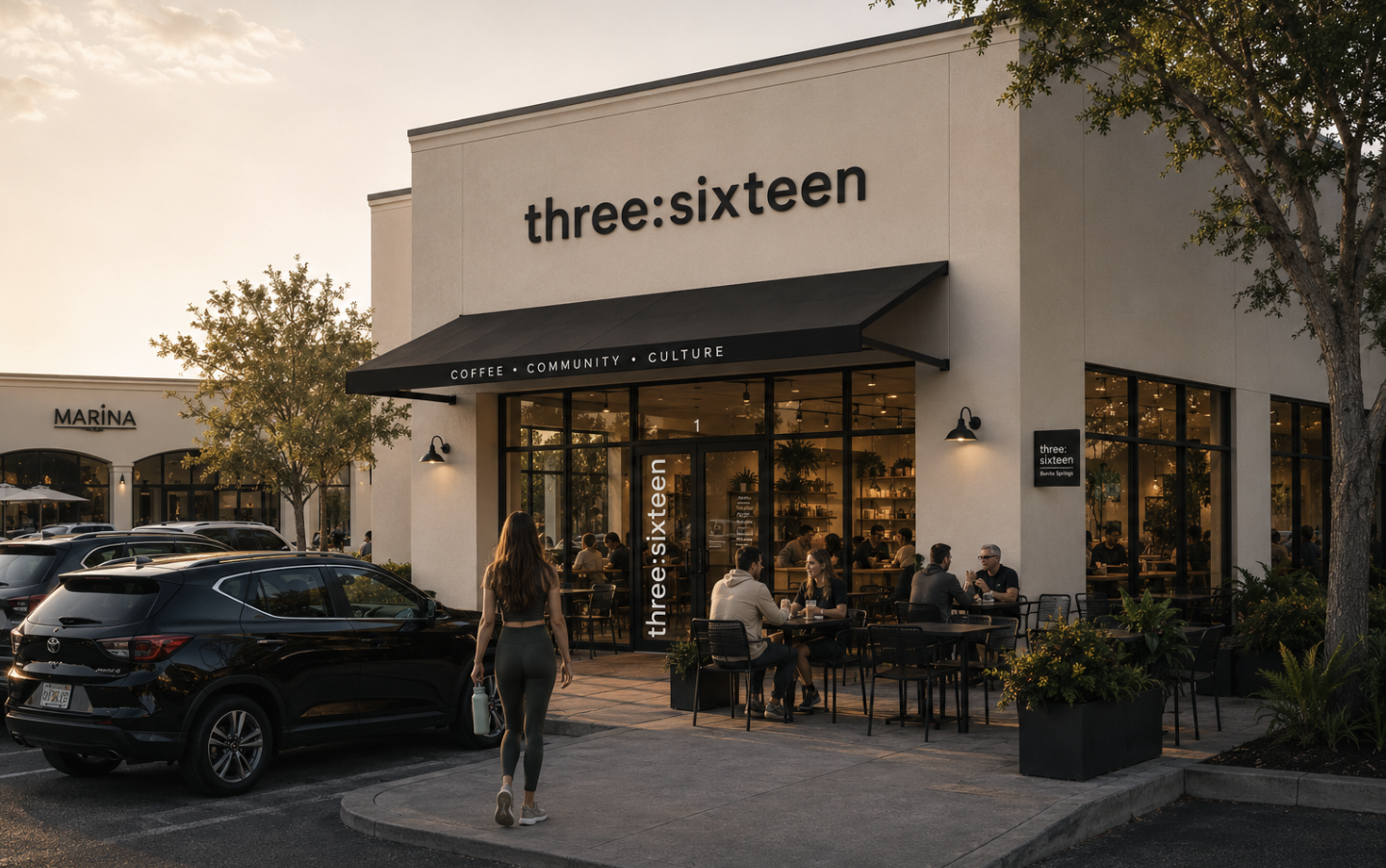
This is the café people drive to. The one they put in their maps app, tell their friends about, make a habit out of. The location might be off the main road, in a strip mall, tucked behind something more prominent. From the outside, it shouldn’t work. But it does.
The destination café wins not because of where it is, but because of what it is. The product, the space, the experience — they’re compelling enough that people rearrange their morning to get there.
The advantages are different but powerful:
— The guests who find you actually want to be there. That intent drives loyalty at a different level than convenience does.
— Lower rent pressure. Secondary locations cost less, which gives you more room to invest in quality.
— Word of mouth works harder. Someone who drove 15 minutes out of their way to get a coffee will tell five people about it. Someone who grabbed a coffee because it was next to the elevator tells no one.
— You own your audience. The relationship is with your brand, not with the address.
But it demands more:
— You have to earn every single guest. Discovery doesn’t happen by accident — it requires marketing, reputation, and time.
— The early months are harder. Revenue builds slowly as word spreads, and you’re carrying full costs throughout.
— The product cannot be mediocre. A foot traffic café can survive on convenience. A destination café cannot. If the thing people drove for isn’t worth the drive, they don’t come back.
Where Three Sixteen Wiggins Pass sits — and why
Our first location is not a high foot traffic location. I’ve said it before: it’s a 5 out of 10 in terms of visibility and passing traffic. We didn’t get the corner of 5th Avenue. We got what was available to a first-time operator with a vision but no proven track record. That’s the reality for most people opening their first place.
So we made a decision early on: we were going to be a destination. Not by default, but by design. That meant the product had to be genuinely worth seeking out. The space had to be somewhere people wanted to stay. The experience had to be consistent enough that someone who came once would tell someone else, and that person would actually show up.
It also meant we had to be serious about marketing in a way that a foot traffic café doesn’t have to be. We couldn’t rely on the street to bring people in. We had to give them a reason to come specifically to us.
That’s a harder path in the first year. But it builds something the foot traffic café can’t easily replicate: a relationship between a brand and its guests that isn’t dependent on an address.
Which model is right for you?
If you’re thinking about opening a café, be honest with yourself about which game you’re playing — and whether you’re prepared to play it.
If you have access to a genuinely high foot traffic location at a rent that doesn’t destroy your margins, and you’re building a concept designed for volume and speed — that model can work. But those locations are rare, expensive, and rarely available to first-time operators.
If you’re going into a secondary location — which most first cafés do — then you’re building a destination whether you plan to or not. The question is whether you build it intentionally or discover it by accident when the guests don’t show up.
The destination café is not the easy path. But it’s the one where the brand you build actually belongs to you.