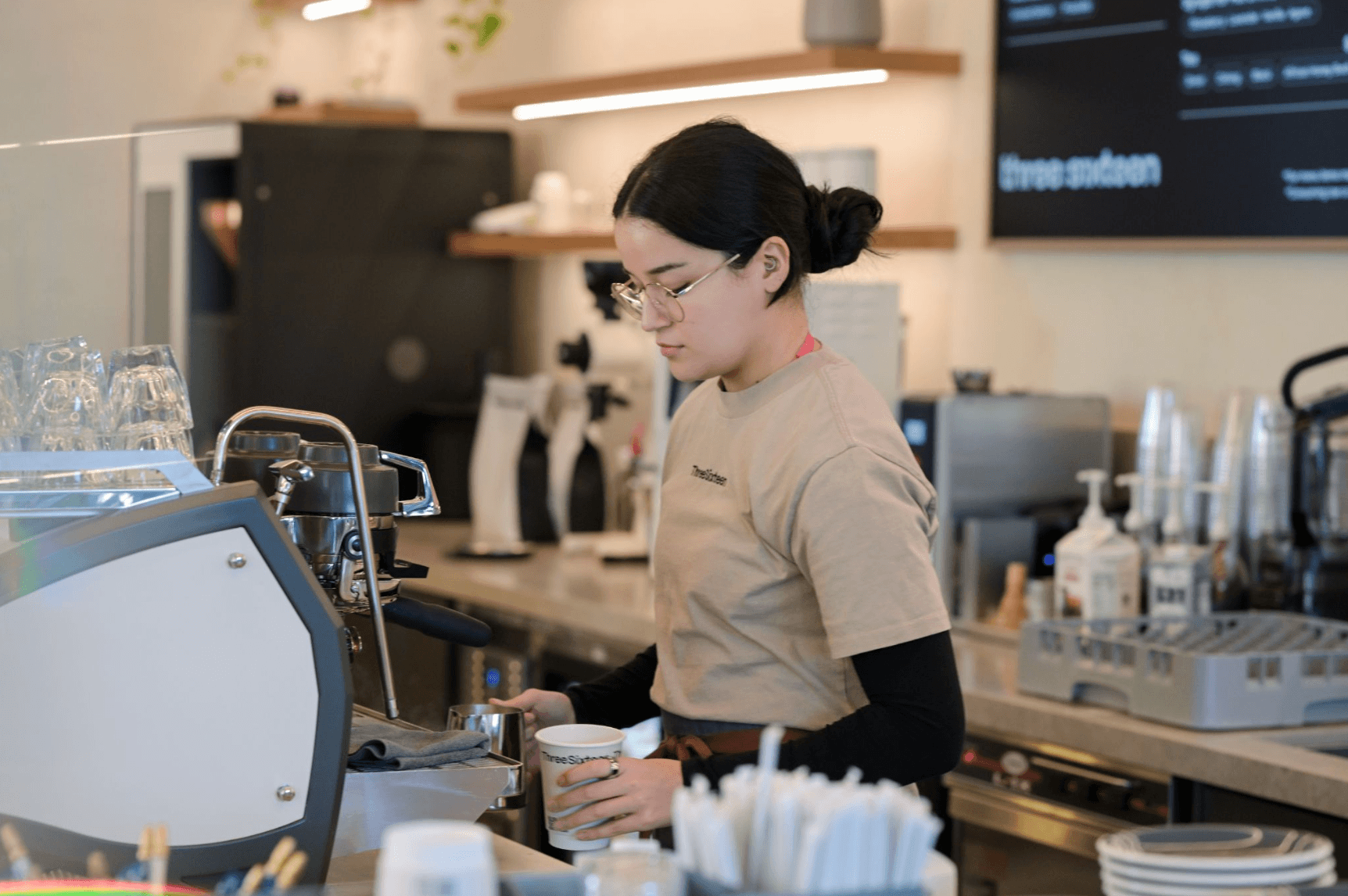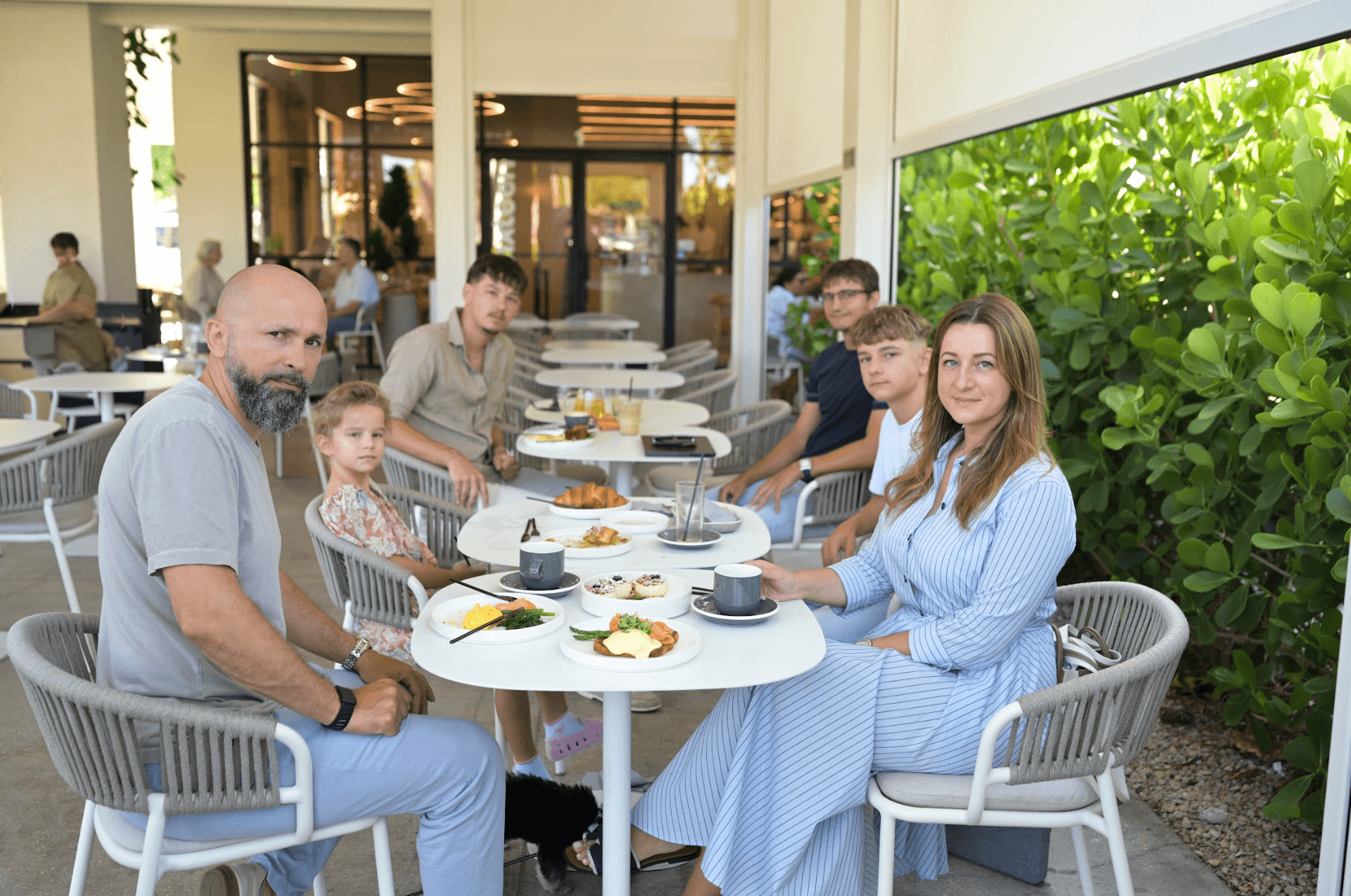

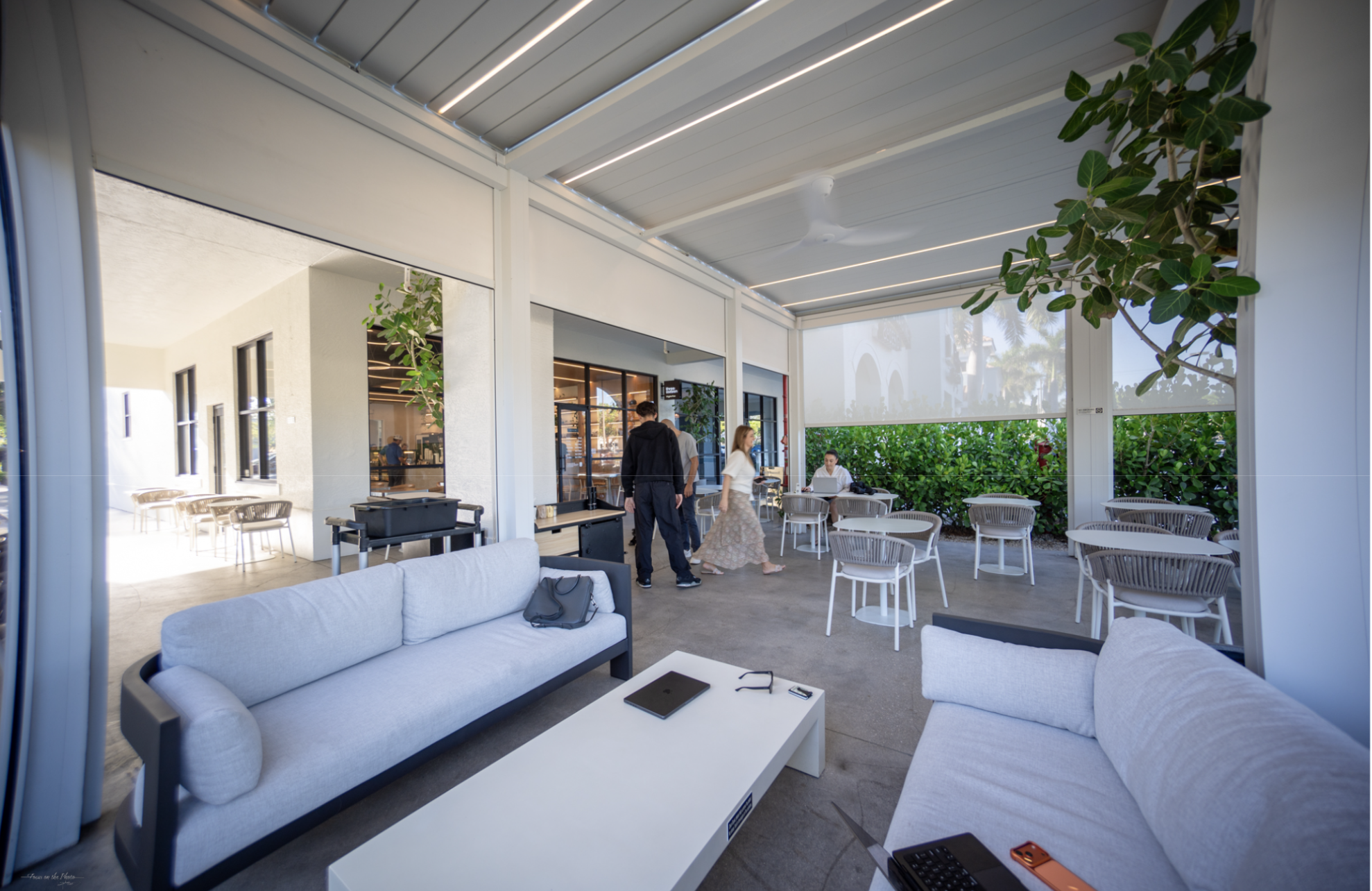
Walk into enough cafés and you start to feel it immediately. Not in the coffee — before the coffee. In the way the room is arranged. In whether the person behind the bar looks up when you walk in. In the small things that nobody told them to do but someone decided mattered anyway.
That feeling has a source. And it isn't the equipment, the location, the funding, or the concept. It's the person who built the place — and specifically, whether they are obsessed with what they do.
Not passionate. Obsessed. There's a difference.
Passion fades. Obsession doesn't.
Passion is what you feel at the beginning. It's the excitement of the idea, the energy of the opening, the high of the first good review. Passion is real and it matters — but it's also responsive to conditions. When things are going well, passion is easy. When the roaster breaks for the fourth time in six months, when the team calls in sick on a Saturday, when the numbers don't add up the way you planned — passion has a way of going quiet.
Obsession is different. Obsession doesn't require good conditions. It's the thing that keeps you thinking about the croissant at 11pm not because you have to but because you genuinely can't stop. It's noticing the thing that's slightly off about the extraction even when the guest didn't notice and will never notice. It's caring about the detail that has no direct ROI — the way the cup is placed, the temperature of the room, the music at 8am versus the music at noon.
Obsessed people don't think about their business when they're at work. They think about it all the time. In the shower. On the drive home. In the middle of a conversation about something else entirely. Not because they're workaholics — because the problem is genuinely interesting to them and they can't put it down.
The best businesses in the world were not built by people who showed up and did the work. They were built by people who couldn't stop thinking about the work even when they weren't there.
What obsession looks like in practice
It looks like unreasonable attention to things that don't scale.
It looks like spending an hour dialling in the espresso on a Tuesday morning when the café opens at eight and you could have opened at seven-forty-five if you'd accepted the shot that was almost right. It looks like remaking the almond cream because the texture was two percent off from what it should be, even though nobody in the dining room would have caught it. It looks like reading about lamination techniques at midnight because you're convinced there's something you're still not getting quite right.
It looks like caring about the guest experience so specifically that you notice which table gets the most natural light at 9am and which one sits in a draft when the door opens, and you factor that into where you seat people without ever making a policy about it.
None of this is efficient. Most of it is invisible to the customer. All of it is the reason the customer comes back.
The businesses that last are built this way
Look at any café, restaurant, or business that has built a genuine following over years — not a viral moment, not a lucky location, but a real community of people who would notice if it disappeared — and you will find an obsessed person somewhere at the origin of it.
Not always the loudest person. Not always the most visible one. But someone who, at the point when most people would have accepted good enough, decided that good enough wasn't the thing they were building toward.
The market is full of good enough. Good enough coffee, good enough service, good enough spaces. Good enough is achievable with reasonable effort and professional competence. It produces a business that works until something better opens nearby.
The businesses that survive the thing better opening nearby are the ones that were never competing on good enough. They were competing on something that can't be replicated by a better-funded competitor or a more convenient location — the accumulated weight of a thousand decisions made by someone who cared more than they needed to.
Why this matters for Three Sixteen specifically
We spent more than twice what we budgeted to open. Not because we were careless with money — because every time we faced a decision between the version that was good enough and the version that was right, we chose the version that was right. The equipment. The build-out. The sourcing. The team.
That's not a business strategy. It's a symptom of obsession. And it creates a specific kind of problem: you are now accountable to a standard that most of your guests can't fully articulate but will absolutely notice if you drop.
The croissant that isn't quite right — the guest doesn't know why it's off. They just know something is different. The espresso that was pulled thirty seconds too long — most people won't identify the cause. But something about the cup feels less good, and they file it somewhere they can't name.
Obsessed people notice these things before the guests do. And they fix them not because a customer complained but because the standard they're holding themselves to doesn't allow for the alternative.
The honest version
Obsession is not comfortable. It is not compatible with switching off at the end of the shift. It does not respond well to 'good enough for now.' It makes you a difficult person to work for if you're not careful, and it makes you a difficult person to be if you don't manage it.
But it is the only reliable source of the thing that makes a business worth having: the accumulated evidence, in every detail of the experience, that someone genuinely cared.
You can feel that when you walk into a place. You feel its absence too.
We're building Three Sixteen to be the kind of place where you feel it. That requires being the kind of people who can't stop thinking about it. We're not there yet on every dimension. But the obsession isn't going anywhere — and that's the only part we're certain about.