
Starbucks closed around 500 North American locations in 2025. It posted negative sales growth — one of only 12% of top coffee chains to do so. Its CEO acknowledged that the brand had lost the cozy, neighborhood café feeling that made it successful in the first place and announced a strategy to get it back.
Meanwhile, independent specialty cafés — the ones without apps, loyalty point systems, or national marketing budgets — are holding their guest bases, building communities, and in many cases growing.
This is not a coincidence. It’s the result of a structural shift in what consumers want from a coffee experience — and why the things that made chains dominant for two decades are now working against them.
The numbers that tell the story
The Technomic 2025 Top 500 Restaurants report laid out the picture clearly. The coffee segment expanded from 19 to 24 concepts on the list — more competition, more variety, more consumer choice. But the growth was almost entirely concentrated outside the legacy players.
Starbucks posted negative sales growth. Dunkin’, Peet’s, and Tim Hortons also fell behind. The chains gaining share were smaller, faster-moving, and built around a different value proposition: 7 Brew achieved 163% sales growth — nearly double the next-highest chain in the entire Top 500. Dutch Bros grew 26% in sales and 18% in unit count. Both built their identity around speed, customization, and genuine staff energy rather than brand legacy.
Among the broader population, 66% of Americans drink coffee daily — up 7% from 2020. The demand is not shrinking. What’s shrinking is the share of that demand flowing to the brands that used to capture most of it automatically.
“In some ways, I think Starbucks is a victim of their own success. Customers who want a cozy or premium experience have already moved on to independent coffee shops.” — Danielle Kayes, George Washington University
What chains can’t do — structurally
The limitations of the chain model are not failures of execution. They’re built into the model itself, and independent cafés benefit from them whether they intend to or not.
The first is sourcing. A chain with hundreds or thousands of locations needs an enormous, consistent, predictable supply of coffee. That means sourcing from suppliers large enough to deliver at scale, which means sacrificing access to the small-lot, high-scoring beans that define specialty coffee at its best. As Arda Barlas, owner of Boxx Coffee, put it: when you have a big chain, you can’t source a high-quality lot from a specific farm if it only produces five to ten bags. The number of potential quality suppliers shrinks as the number of locations grows. An independent café with one or two locations can source exactly the beans it wants. A chain cannot.
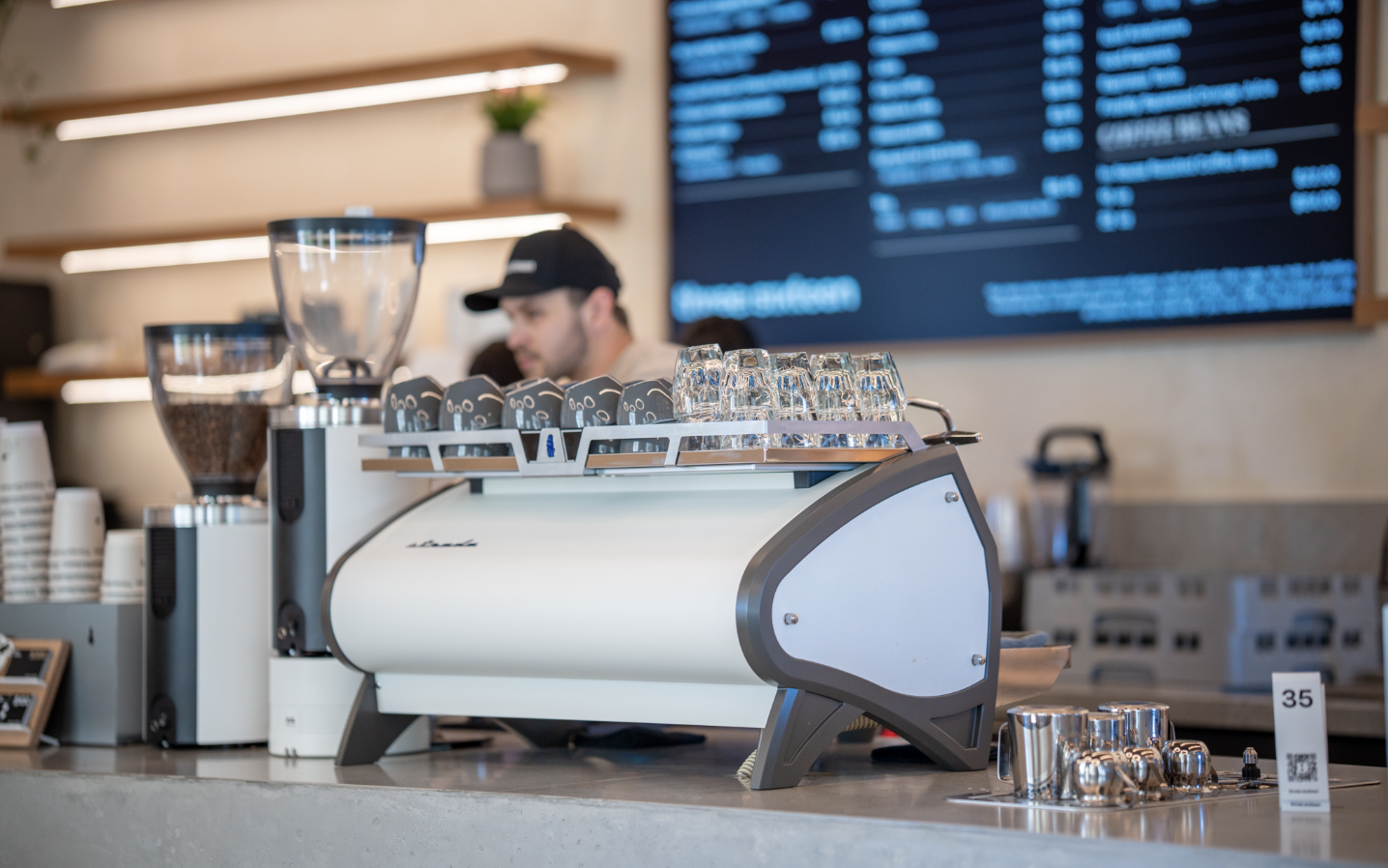
The second is consistency at scale. Chains solve the consistency problem through standardization — automated machines, tightly scripted recipes, minimal barista discretion. This produces a reliable product but eliminates the craft. The flat white at every Starbucks tastes the same because it’s designed to. The flat white at a great independent café tastes the way it does because a skilled barista made it, and that’s visible in the cup.
The third is personality. Every Starbucks looks like every other Starbucks. The layout, the music, the menu format, the cup design — all of it is engineered for replication. That’s the point. But personality cannot be replicated at scale, and personality is increasingly what consumers are paying for. The independent café with its specific aesthetic, its particular regulars, its barista who knows your name — that experience is structurally unavailable to a chain, regardless of budget.
What Starbucks is trying to do about it
The current Starbucks CEO has acknowledged the problem directly. The strategy announced in 2025 is essentially an attempt to reverse-engineer what independent cafés do naturally: bring back handwritten names on cups, reintroduce comfortable seating, slow down the transactional feel of the ordering experience, restore the cozy neighborhood café atmosphere that built the brand in the first place.
It’s a significant strategic shift — and a revealing one. The largest coffee chain in the world is spending enormous resources trying to feel more like a small independent café. That tells you something important about where consumer preference has moved.
Whether it works is a different question. The brand legacy, the app infrastructure, the mobile-order-dominant culture of the current Starbucks customer base — these are not things you undo quickly. Starbucks built itself into a machine optimized for throughput. Rebuilding it into something that feels human is not a marketing exercise. It’s an operational transformation, and those take years.
The independent advantage — and what it requires
Independent cafés have structural advantages that chains cannot replicate. But those advantages only materialize if the café actually does the things chains can’t.
Sourcing better beans is only an advantage if you actually source better beans — and if you can talk about why they’re better in a way that means something to your guests. Having a personality is only an advantage if the personality is genuine and consistently expressed. Building community is only an advantage if you actually invest in the relationships that make a community possible.
The independent café that uses mediocre beans, has an indifferent team, and offers nothing that a chain doesn’t — that café has none of the advantages and all of the disadvantages. No app. No loyalty points. No national brand recognition. No marketing budget. Just a space and a product that doesn’t give anyone a reason to choose it over the chain down the street.
The structural shift in consumer preference is real and it is moving toward independent specialty cafés. But it’s moving toward the ones that are actually independent and actually specialty — not just the ones that lack the scale to be a chain.
Where Three Sixteen fits in this
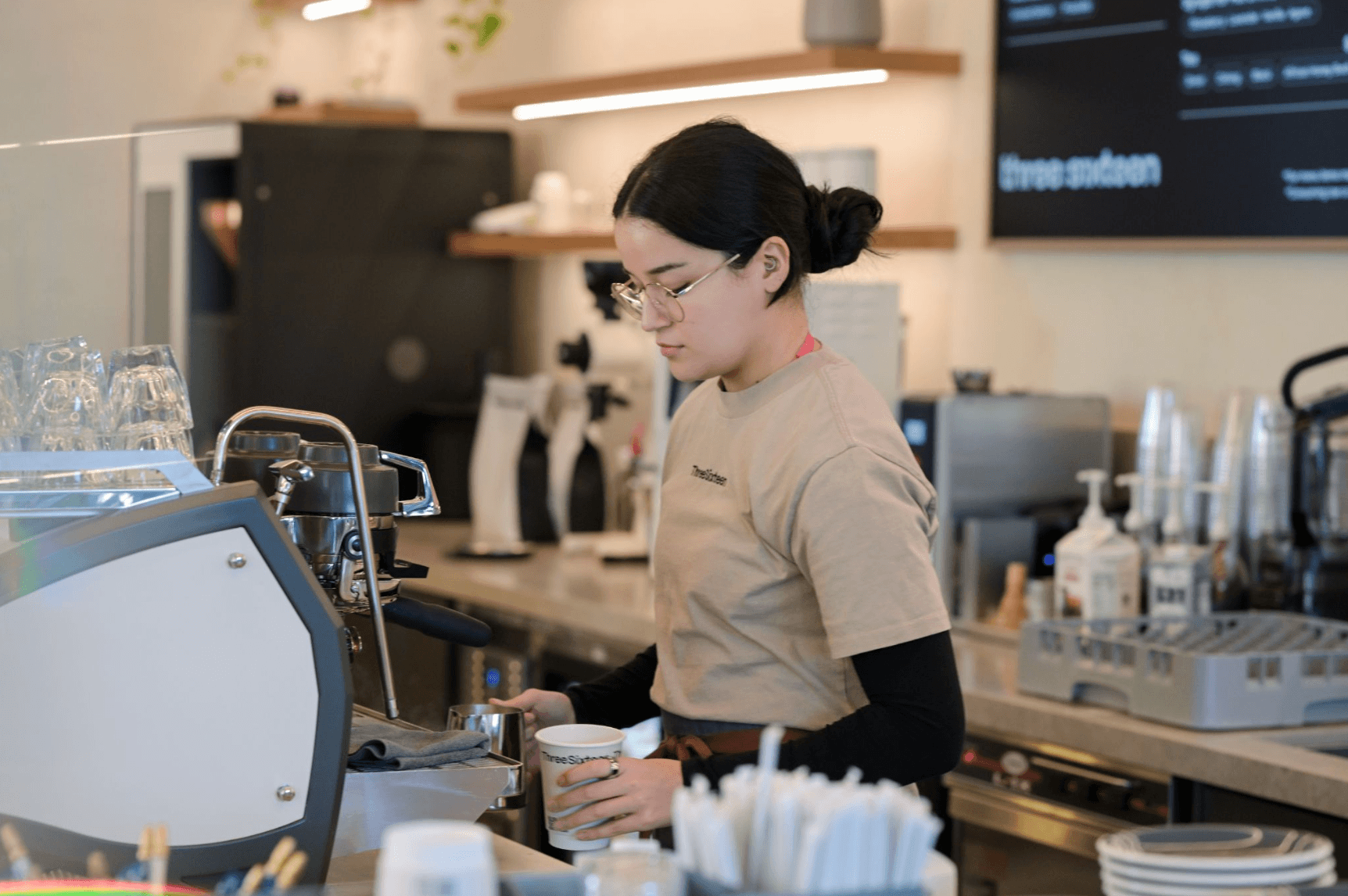
We opened Three Sixteen knowing we would never compete with Starbucks on convenience, app technology, or brand recognition. We’re not trying to. We’re trying to be the thing Starbucks is now spending billions trying to become: a café with a genuine identity, a product that reflects real craft, a space where people want to stay, and a team that actually knows its guests.
The fact that the largest coffee chain in the world is now strategically pursuing what independent specialty cafés do naturally is not a threat to us. It’s a validation of the market we’re building for.
What it does mean is that the bar for what “independent” has to mean is rising. The guest who moves away from Starbucks in search of something more genuine will find it — at the cafés that have built something worth finding. The ones that haven’t will simply be a different version of the same disappointment.
We intend to be worth finding