
Someone asks, every few weeks, whether we've thought about lowering prices to bring in more guests. It's a reasonable question. Naples in the off-season is quieter. A $6 cortado sounds like a lot to someone used to paying $3 for a coffee at a gas station. And the math seems simple: lower the price, more people come in, more revenue.
The math is wrong. And the premise is wrong before the math even starts.
Here's why we don't compete on price — and why we never will.
Price is the easiest lever and the most destructive one
Any business can lower its prices. It requires no skill, no creativity, no insight into what guests actually value. You change a number on a menu and the deed is done. It is the default move of every business that doesn't know what else to try, and it is the beginning of a spiral that is very hard to reverse.
When you lower prices to attract guests, you attract a different kind of guest — one who came because of the price, not because of the product. That guest will leave the moment someone else offers a lower price. They are not loyal to you. They are loyal to the number. The moment the number changes, so does their loyalty.
Meanwhile, the guests who valued what you were offering at the original price — who chose you specifically because of the quality, the standard, the experience — now see the price reduction as a signal. A signal that the product might not be worth what they thought, or that you weren't confident in its value in the first place. Price reductions in quality businesses do not go unnoticed by the guests who were paying the original price. They notice, and they draw conclusions.
You can always find a cheaper option. You cannot always find a better one. We want to be the better one — not the cheaper one.
What price actually communicates
Price is not just a number. It is a statement about what you believe your product is worth — and by extension, what kind of guest you are trying to serve and what kind of experience you are trying to create.
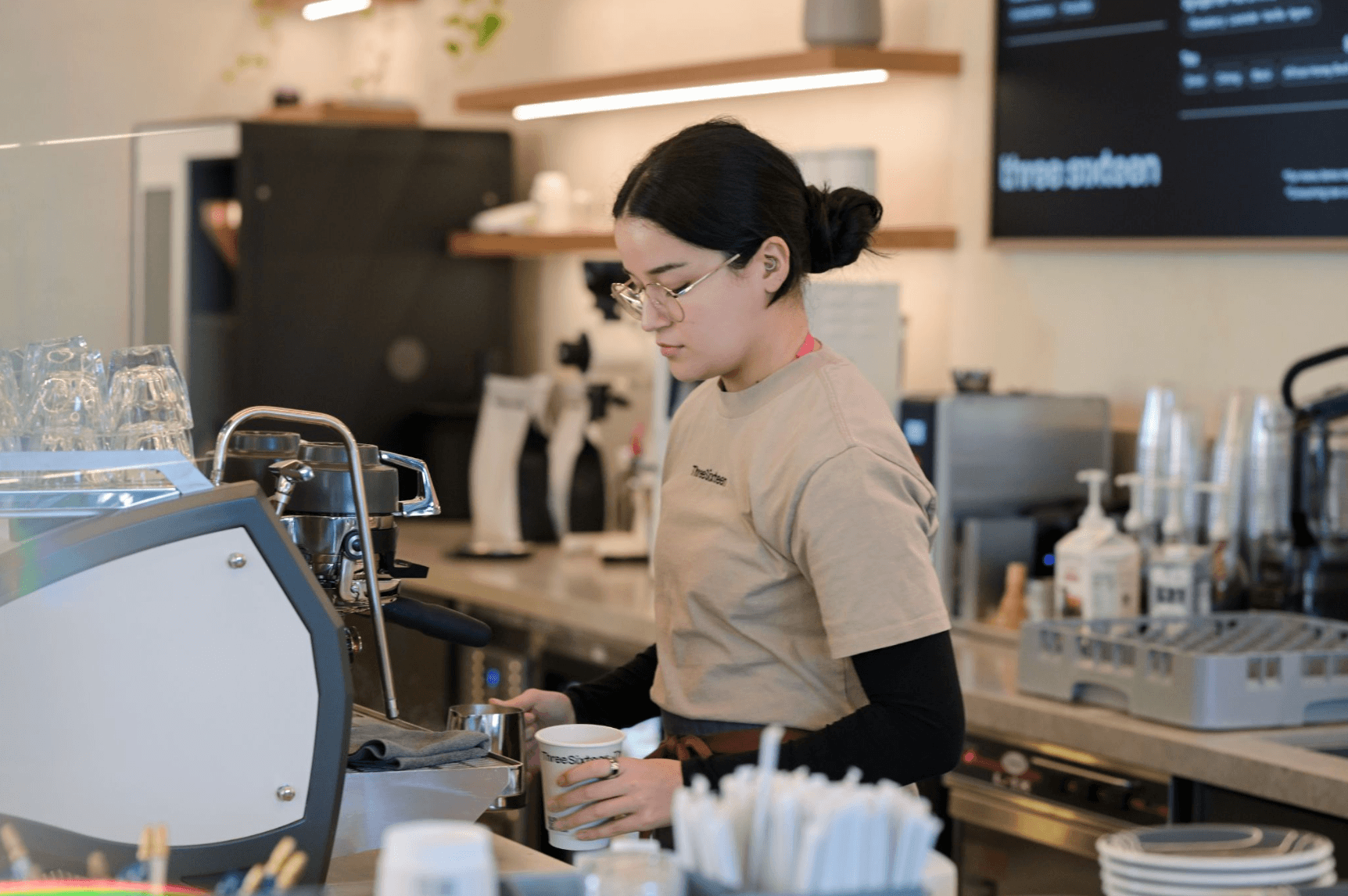
A flat white at Three Sixteen costs what it costs because of what goes into it. The beans are sourced at a specialty grade. The machine is calibrated. The shot is pulled to spec. The milk is textured by a barista who has spent months developing that skill. The cup it's served in is ceramic because the temperature and the feel matter. The space around it was built with intention. None of these things are free, and none of them are optional if the standard is going to be what it is.
When we removed the cents from our pricing and rounded everything to whole dollar amounts, it was a deliberate statement: these prices are decisions, not calculations. A price of $5.95 reads as optimised — as a number arrived at by adding a margin to a cost to four decimal places. A price of $6 reads as confident. It says we know what this is worth and we're not hedging about it.
Pricing with confidence is part of the product. Guests who understand quality recognise it. Guests who are looking for the cheapest option were never going to be our guests regardless of what number we put on the menu.
The race to the bottom has a destination
Every market has businesses competing on price. Coffee is no different. There are places in Naples that will sell you a large coffee for two dollars. That is not a business strategy we envy. It is a business strategy with a known destination: thin margins, ingredient compromises, staff who are paid as little as the market allows, and a product that gets gradually worse as costs rise and the price ceiling refuses to follow.
The race to the bottom ends at the bottom. The businesses that win the price war end up with a product that is the cheapest rather than the best, serving guests who are the most price-sensitive rather than the most loyal, operating on margins that leave no room for investment in quality, equipment, or team. It is a winnable race with a prize no serious business wants.
We have no interest in running that race. Not because we are indifferent to accessibility — we understand that a $6 cortado is not within reach for everyone, and that is a real limitation. But lowering the price of the cortado does not solve that problem. It solves a different problem — the problem of not having enough guests — by attracting guests who are not coming for the cortado. That is not a solution. It is a substitution.
What we do instead
Instead of competing on price, we compete on the things that price cannot buy: consistency, quality, the experience of being in the room, the relationship between the team and the guest.
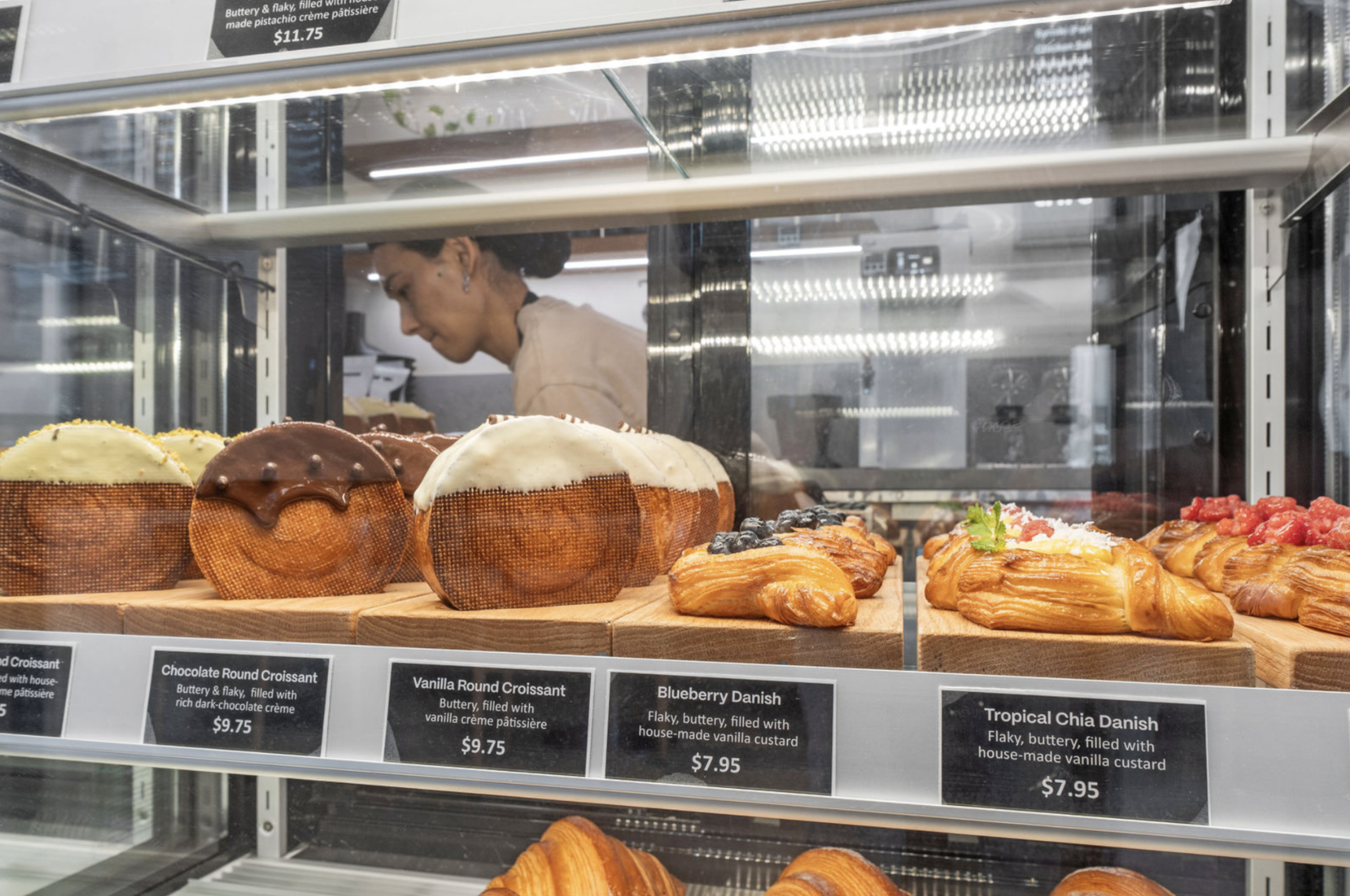
Consistency is the hardest one. It means the cortado on a slow Tuesday in August is the same as the cortado on a packed Saturday in February. It means the seventh day of a seven-day week holds the same standard as the first. It means the croissant in the display case matches the photograph on the menu — every time, for every guest, whether we know them or not.
Quality means not cutting corners when the corners are expensive to hold. It means sourcing the beans we source even when cheaper options are available. It means laminating the croissant dough in-house every morning even when a commercial supplier would be easier. It means replacing equipment that doesn't meet the standard rather than making do.
Experience means the space, the team, the way a guest feels when they walk in. These things cannot be manufactured cheaply and they cannot be replicated by a competitor who is trying to win on price. They are the result of sustained investment in people, in space, and in a culture that takes the guest seriously as the reason the business exists.
What we're building toward
The goal is not to be the most expensive café in Naples. The goal is to be the one that is unambiguously worth what it costs — where every guest who pays the price feels, at the end of the experience, that the exchange was fair or better than fair.
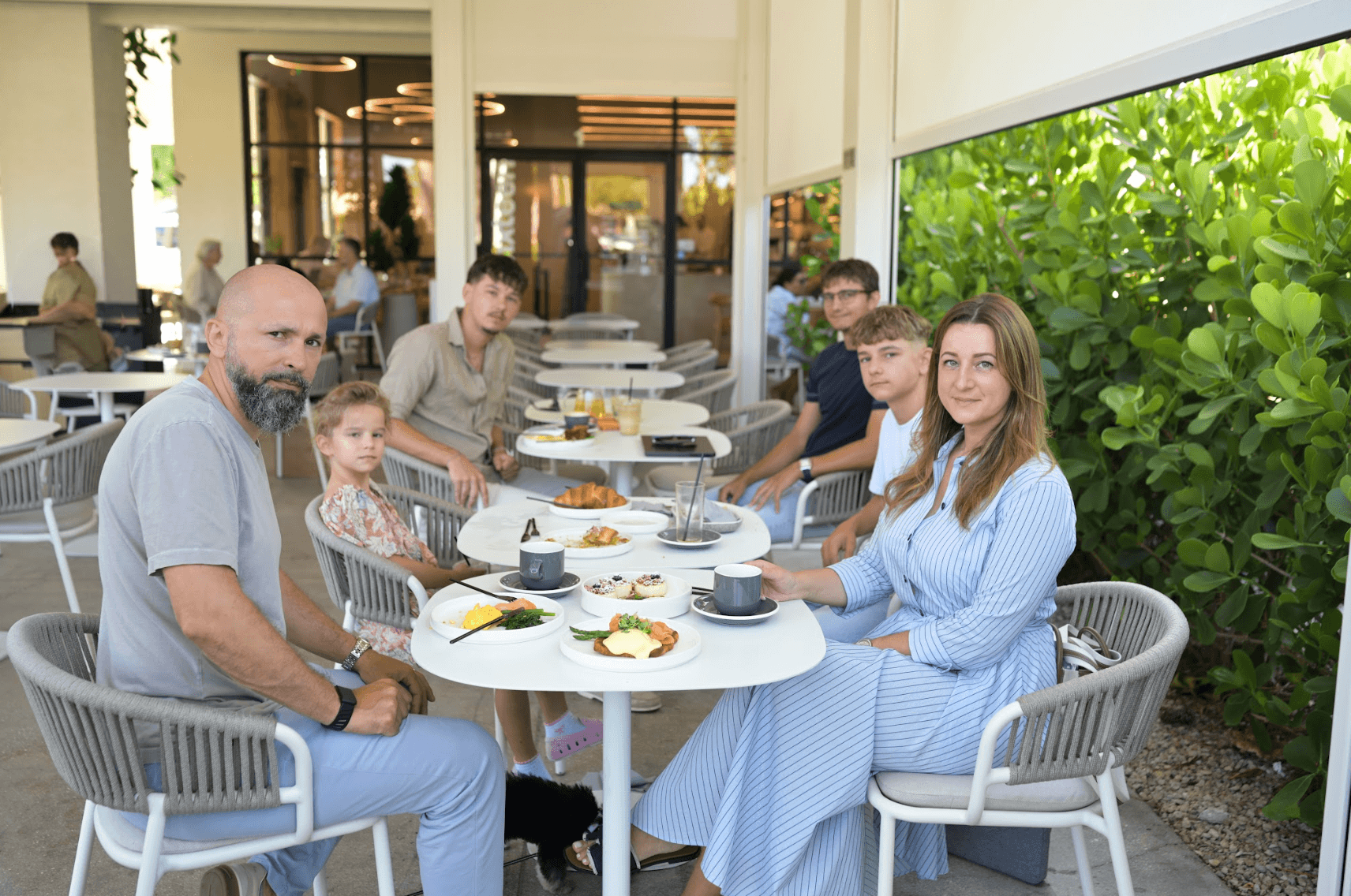
When a guest drives from Sarasota specifically to try our breakfast, and then sends us two photos side by side — the dish from the menu and the dish from the table — to say they were identical, and that they had never seen that before: that guest did not come because of our prices. They came because of something they had heard or read or seen that made them believe the experience was worth the drive. That is the business we are building.
Price is the last thing we want to be known for. The first thing we want to be known for is that when you come to Three Sixteen, you get exactly what was promised — and that the standard holds whether you've been coming for a year or you walked in for the first time this morning.
We can't be the cheapest. We don't want to be. We want to be the one that, when someone asks where to go for really good coffee in Naples, the answer is immediate and the reason is obvious.